 Kids Portal For Parents India Kids Network
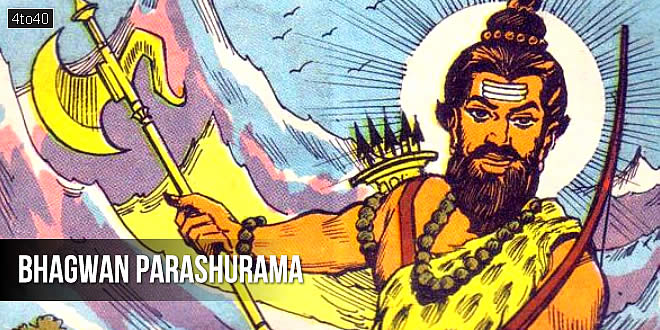
Bhagwan Parashurama stands as the sixth incarnation of Vishnu, embodying both the fierce might of a warrior and the wisdom of a sage. Known as Rama with an axe, Parashurama descended during a time when the Earth was burdened by oppressive and unrighteous rulers. Armed with his legendary axe gifted by Shiva, he eradicated the tyranny of corrupt monarchs and restored balance to the world. Parashurama’s legend stretches across India’s sacred geography and epic literature, from shaping the western coastline to guiding great warriors in the Mahabharata. Uniquely, he is counted among the immortal Chiranjeevis, ever ready to guide and protect righteousness. His story continues to inspire with its blend of valor, discipline and unwavering commitment to justice.
Parashurama: Sixth incarnation of Vishnu
| Characteristics: | Immortal warrior-sage |
| Other Names: | परशुराम – Bhargava Rama, Rama Jamadagnya, Ramabhadra – “Rama with an axe” |
| Venerated in: | Vaishnavism |
| Abode: | Mahendra Mountains |
| Day: | Thursday |
| Mantra: |
|
| Weapon: | Parashu |
| Born: | Akshaya Tritiya Parashurampuri Shahjahanpur |
| Parents: | Jamadagni (father) / Renuka (mother) |
| Siblings: | Rumaṇvān, Suhotra, Vasu and Viśvāvasu |
| Spouse: | Dharani |
Who is Bhagwan Parashurama?
Bhagwan Parashurama is the sixth incarnation of Vishnu, revered for his unique blend of Brahmin wisdom and Kshatriya valor. He emerged during a time of rampant injustice, with the mission to rid the world of corrupt and oppressive rulers who misused their power and neglected their duties. Parashurama’s identity in the Hindu pantheon is distinct, he is not only an avatar of Vishnu but also one of the seven Chiranjeevis, the immortals destined to remain on Earth until the end of the current age. His birth to sage Jamadagni and Renuka places him within the revered Bhargava lineage, directly connecting him to the sage Bhrigu. Parashurama’s family ties extend to other divine figures, as his wife Dharani is regarded as an incarnation of Lakshmi, further intertwining his story with the principal deities of Hinduism. His role as a teacher is also significant; he mentored legendary warriors such as Bhishma, Dronacharya, and Karna, shaping the course of epic narratives like the Mahabharata.
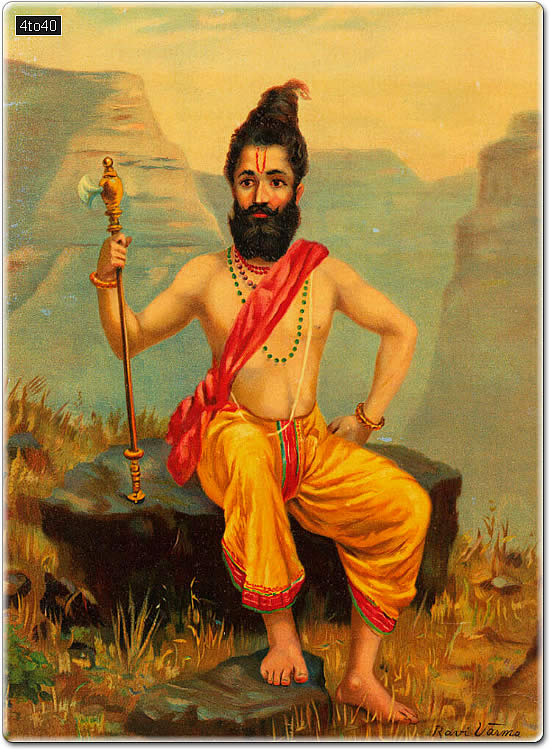
Parashurama’s most iconic symbol is his axe, or parshu, which he received from Shiva after intense penance. This weapon is central to his identity, earning him the name Rama with the axe. He is often depicted with a battle axe in hand, signifying his martial prowess and his divine mission to restore righteousness. Parashurama is also associated with the bow and arrow, further emphasizing his mastery of weaponry. Unlike many other deities, he does not have a traditional animal vehicle or vahana. His presence is marked by the qualities of aggression, courage, and discipline, balanced by serenity and prudence. These elements together define Parashurama as a powerful, immortal force for justice and balance in the Hindu tradition.
Significance of Bhagwan Parashurama:
Bhagwan Parashurama represents the union of spiritual wisdom and martial strength. His philosophical significance centers on the balance between power and responsibility, teaching that true strength must always serve righteousness. Parashurama embodies unwavering commitment to dharma, standing against injustice even when it demands personal sacrifice. His dual identity as both a sage and a warrior highlights the importance of integrating knowledge with action and maintaining discipline and self-control. Parashurama’s life is a lesson in using authority judiciously, advocating for moral integrity, and emphasizing the value of mentorship and lifelong learning. He also warns against the dangers of unchecked materialism, urging society to pursue purpose over mere accumulation of wealth or power.
Spiritually, Parashurama is revered as an immortal guide who continues to inspire devotees to uphold justice and righteousness. His presence in both the Mahabharata and Ramayana, as well as his role as a teacher to legendary warriors, reinforces his enduring influence in Hindu thought. Parashurama’s teachings remain relevant, encouraging individuals to channel their strengths for the greater good and to seek balance between assertiveness and compassion.
Parashurama holds particular importance in regions like Kerala, Karnataka, Maharashtra, and Goa, where legends credit him with creating the land itself. These areas, known as Parashurama Kshetra, are dotted with temples and sacred sites dedicated to him. His worship is especially prominent in these regions, where he is seen as both a protector and a cultural founder. Temples such as the Parashurama Temple in Kerala and Parashuram Kund in Arunachal Pradesh attract thousands of devotees, especially during major festivals.
Festivals dedicated to Parashurama include Parashurama Jayanti, celebrated on Akshaya Tritiya, marking his birth. Devotees observe rituals such as fasting, special pujas, recitations of his stories, and communal prayers. Parashurama Dwadashi, another significant festival, is observed with fasting and temple rituals, particularly in southern India. These festivals are occasions for reflection on his virtues and for seeking his blessings for courage, protection, and spiritual growth.
Iconography & Symbolism:
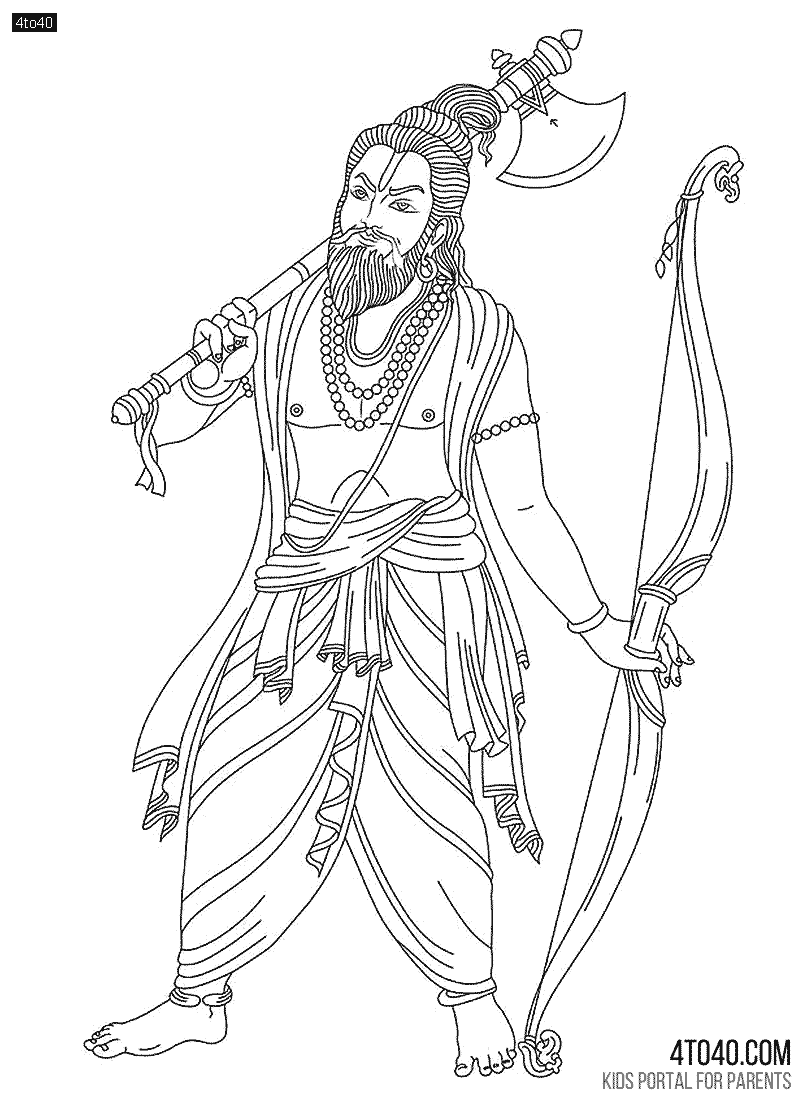
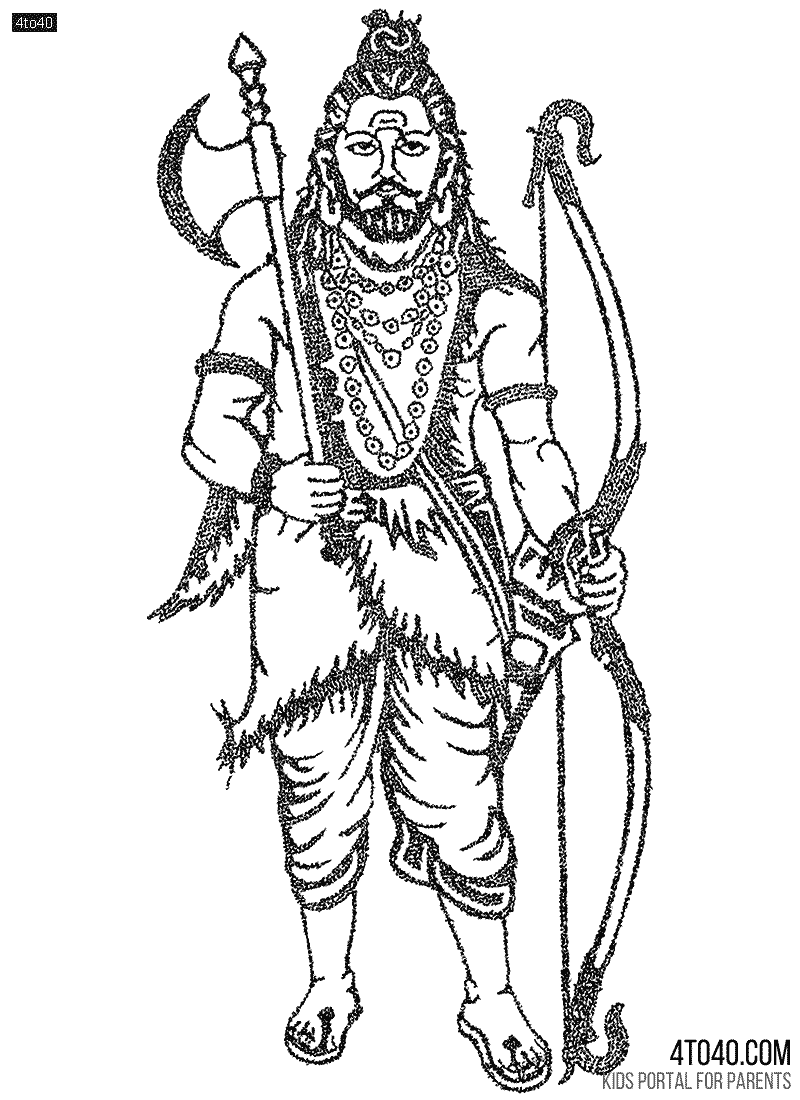
Bhagwan Parashurama’s iconography is striking and immediately recognizable. He is typically depicted in a standing posture, exuding both divine serenity and martial vigor. In his right hand, he holds a formidable axe, the parshu, which is his primary symbol and the source of his name. His left hand often carries a bow, highlighting his mastery over weapons and his dual role as sage and warrior. Some depictions include a lotus carved at his feet, symbolizing purity and spiritual grounding. Parashurama’s expression combines aggression and valor with calmness and patience, reflecting his purpose of restoring balance and justice. His physical form is robust and youthful, embodying both the discipline of a sage and the strength of a Kshatriya. He is not associated with a traditional animal vehicle, setting him apart from many other deities.
Artistic representations of Parashurama span temples, sculptures, and regional art forms, especially along India’s western coastline. Temples dedicated to him, such as those in Kerala, Maharashtra, and Karnataka, often feature idols with the characteristic axe and bow. The Parashurameshvara Temple in Odisha, though primarily dedicated to Shiva, is an architectural marvel with intricate carvings and sculptures that narrate stories from Hindu mythology, including scenes from the Ramayana and Mahabharata. In some temples, especially in the Himalayas, rare murtis of Parashurama with multiple heads or adorned with precious stones are displayed during special festivals. These artistic depictions emphasize his unique status as an immortal sage-warrior and his enduring influence across centuries.
Color symbolism and posture further enrich Parashurama’s iconography. He is often shown with a radiant complexion, sometimes described as youthful and glowing, signifying vitality and divine energy. His standing posture with the axe raised asserts readiness and authority, while the bow in the other hand suggests restraint and preparedness. The lotus at his feet symbolizes spiritual purity. Mudras in his depictions, such as the abhaya mudra (gesture of protection), reinforce his role as a protector and upholder of dharma. The absence of elaborate ornamentation in many depictions underscores his ascetic discipline and focus on duty rather than personal adornment. This combination of color, posture, and symbolic gestures encapsulates Parashurama’s essence as a force of justice, wisdom, and spiritual strength.
Origin of Bhagwan Parashurama:
Bhagwan Parashurama’s mythological origin is rooted in a time when the world was plagued by the tyranny and corruption of the Kshatriya warrior class. Born to sage Jamadagni and Renuka, Parashurama emerged as the sixth avatar of Vishnu with a dual heritage, Brahmin by birth and Kshatriya by action. His birth was a divine response to the imbalance caused by unrighteous rulers who oppressed the virtuous and misused their power. Parashurama’s mission was to restore cosmic order by eradicating these corrupt kings, a task he accomplished by defeating the Kshatriyas twenty-one times, symbolizing his relentless drive to reestablish dharma.
His story is deeply interwoven with major Hindu scriptures. In the Ramayana, Parashurama confronts Bhagwan Rama after the breaking of Shiva’s bow at Sita’s swayamvara, recognizing Rama’s divinity and marking the transition of avataric authority. In the Mahabharata, Parashurama appears as a formidable mentor, imparting martial knowledge to legendary warriors like Bhishma, Drona, and Karna. The Puranas, including the Bhagavata and Vishnu Purana, describe his role in restoring justice and narrate his legendary feats, such as reclaiming land from the sea to create the western coast of India. Parashurama’s presence across these texts highlights his unique status as an immortal avatar who bridges multiple yugas and interacts directly with other incarnations of Vishnu.
Parashurama’s narrative also connects to cosmic events and Vedic traditions. His acquisition of the divine axe from Shiva after intense penance symbolizes the union of spiritual discipline and martial prowess. The legend of him reclaiming land from the sea demonstrates his ability to reshape the world’s geography, further establishing his divine authority. Parashurama’s story stands as a testament to the cyclical restoration of balance in the universe, embodying the principle that divine intervention arises whenever dharma is threatened.
Legends and Stories:
Parashurama’s legendary acts are foundational to Hindu mythology. His annihilation of the Kshatriyas twenty one times is a direct response to the murder of his father, Jamadagni, by a king seeking the sacred cow Kamadhenu. This act is not just vengeance but a restoration of dharma, as it purges the world of corrupt rulers and reestablishes order.
The encounter with Bhagwan Rama at Sita’s swayamvara is a critical turning point in the Ramayana. Parashurama’s challenge to Rama after the breaking of Shiva’s bow is a symbolic transfer of divine authority, recognizing Rama’s supremacy and marking the end of Parashurama’s era of intervention.
His role as a martial guru in the Mahabharata is significant. Parashurama trains Bhishma, Dronacharya, and Karna, imparting advanced weaponry and combat skills. The curse placed on Karna, causing him to forget his knowledge at a decisive moment, directly influences the outcome of the Kurukshetra war.
The confrontation with Ganesha at Mount Kailash is a unique episode. Parashurama, denied entry by Ganesha, engages in battle and severs Ganesha’s tusk. This act is reflected in Ganesha’s iconography and highlights Parashurama’s uncompromising nature.
Parashurama’s obedience to his father, even when ordered to kill his mother, demonstrates his adherence to duty over personal sentiment. His request to restore his mother and brothers to life after fulfilling the command underscores his compassion and the value he places on family.
These stories collectively showcase Parashurama as a relentless enforcer of righteousness, a formidable teacher, and a complex figure whose actions shape the moral and epic landscape of Hindu tradition.
Spiritual Lessons of Bhagwan Parashurama:
Parashurama’s tales impart clear moral and spiritual lessons centered on righteousness, discipline, knowledge, and the responsible use of power. His unwavering commitment to dharma demonstrates the necessity of standing up against injustice, even when it requires difficult or extreme measures. Parashurama’s actions show that true justice involves targeting wrongdoing, not indiscriminate aggression, and that restoring balance sometimes demands decisive
intervention.
His disciplined nature and self-control illustrate the importance of channeling emotions productively. Parashurama’s mastery of both spiritual wisdom and martial skill highlights the value of lifelong learning and the need to balance knowledge with action. His devotion to Shiva and adherence to duty, even in challenging circumstances, teach the significance of obedience, perseverance, and spiritual practice.
The story of Parashurama’s curse on Karna underscores the value of honesty and integrity, especially in the relationship between teacher and student. It also reflects the ancient warrior code, where truth and respect for roles were paramount. Parashurama’s readiness to correct even his own disciples emphasizes that upholding dharma sometimes requires difficult decisions for the greater good.
Parashurama’s legend of reclaiming land from the sea demonstrates that power should be used for the welfare of others, not personal gain. His role as an immortal protector of dharma serves as a reminder that righteousness requires constant vigilance and renewal. Collectively, these lessons encourage courage, perseverance, and the responsible use of strength, urging individuals to use their abilities to protect the vulnerable and maintain justice in society.
Mantras Dedicated to Bhagwan Parashurama:
Om Brahmakshatraya Vidmahe Kshatriyantaya Dhimahi Tanno Parashuram Prachodayat
Meaning: We meditate on the one who embodies both Brahmin and Kshatriya qualities. May Bhagwan Parashurama inspire and guide us.
Benefits: Enhances courage, discipline, and righteousness; invokes protection and spiritual strength; supports the pursuit of justice and dharma.
Om Namo Bhagavate Parashuramaya Namah
Meaning: Salutations to Bhagwan Parashurama, the divine warrior.
Benefits: Removes obstacles, grants inner strength and fearlessness, helps overcome adversities, and fosters determination.
Om Ram Ram Parashu Hastaya Namah
Meaning: Salutations to the one who holds the axe, Bhagwan Parashurama.
Benefits: Bestows protection, removes negativity, strengthens willpower, and supports righteous action.
Bhagwan Parashurama Coloring Pages: