 Kids Portal For Parents India Kids Network
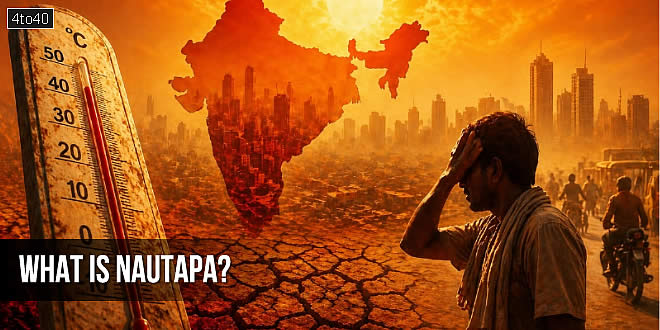
What is Nautapa – the 9 days of intense heat: What experts say and how to be safe during the heat wave
According to Hindu scriptures and astrology, Nautapa begins when the Sun, Surya, enters the Rohini Nakshatra, a lunar mansion in the Taurus zodiac.
Summers in India are a survival game of their own kind. While in many European countries, heatwave alerts are declared at mere 26 degrees Celsius, in India, people are accustomed to enduring temperatures even as high as 40 degrees. North and central India are set to witness the nine days of intense heat, traditionally called the Nautapa. Literally, the term Nautapa means ‘Nau’ or nine and ‘tapa’ or heat or penance.
This year, the Nautapa or the nine hottest days of the summer season, begins on 26th May and ends on 2nd June. During this time, the temperature is expected to exceed 45 to 50 degrees Celsius and even higher in some regions. The soaring temperature will be accompanied by dry and blistering winds called loo.
Nautapa carries both scientific and astrological significance.
What is Nautapa? 9 days of intense heat
The Astrological importance of Nautapa
According to Hindu scriptures and astrology, Nautapa begins when the Sun, Surya, enters the Rohini Nakshatra, a lunar mansion in the Taurus zodiac. The Rohini Nakshatra is ruled by the Moon (Chandra), which is cooling; however, the fierce energy of the Sun is dominant during this transit. The Sun’s energy burns away the cooling influence, thus intensifying earthly heat. The astrological and meteorological phenomenon unfolds in the Hindu month of Jyeshtha.
Although not described by the modern colloquial term Nautapa, the phenomenon of nine days of intense heat during Surya’s transit into Rohini Nakshatra in the Jyeshtha month is mentioned in the Surya Siddhanta, Shrimad Bhagavatam, Padma Purana, Skanda Purana, and Vishnu Dharmottara Purana.
Jyotish texts define the Nautapa period and importance through this shloka:
ज्येष्ठ मासे शीत पक्षे आर्द्रादि दशतारका।
सजला निर्जला ज्ञेया निर्जला सजलास्तथा॥
This roughly translates as, in the Jyeshtha month, during Shukla Paksh, from Ardra Nakshatra onward for the next ten Nakshatras, if there is rain, there will be drought later; if there is intense heat, there will be good rainfall in the monsoon season.
For this reason, it is said that a stronger Nautapa is a pleasant omen for a good monsoon later. During the Nautapa, offering Surya Arghya holds special significance and is believed to provide divine blessings and mental peace.
The meteorological explanation behind Nautapa
During late May and early June, the Sun’s declination puts it almost directly overhead over northern India, near the Tropic of Cancer. Since solar rays fall perpendicularly on the surface of the Earth, maximum heat energy reaches us. There is also a sharp slump in humidity, causing dry and hot conditions, ideal for scorching heatwaves.
The Nautapa is a pre-monsoon period wherein the land heats up quickly before the arrival of the southwest monsoon by mid-June. This leads to low-pressure zones, triggering abrupt dust storms, thunder or pre-monsoon rains in the evenings.
As per meteorologists, temperatures during this time can increase 2 to 5 degrees Celsius above normal due to seasonal solar positioning coupled with atmospheric dynamics.
The health risks during Nautapa and how to protect yourself: Dos and don’ts
Among the most common effects of the unbearable heat during Nautapa are dehydration and heat exhaustion. In a more serious scenario, people, especially school-going children, might suffer heatstroke and seizures.
Skin dryness, chapped lips, and prickly heat. The situation becomes particularly concerning for children, heart patients, diabetics, the elderly and outdoor workers.
Urban areas may even witness increased risk due to the heat island effect, wherein cities experience exponentially higher surface and air temperatures than rural areas due to human modification of the land surface, in addition to the waste heat generated by energy usage.
To avoid falling victim to the intense heat, it is essential to hydrate oneself quite aggressively. Drink around 3 to 4 litres of water daily, and try to drink even more water if outdoors. Include electrolytes with ORS, coconut water, lemon water, chhas or buttermilk. Do not wait to get properly thirsty to drink water. Don’t overdrink in one go, but drink water at regular intervals. Most important: Don’t skip breakfast, have a light and healthy morning meal.
Try to stay indoors during peak heat time, which is 12 pm and 4 pm. Going out before 11 am and after 5 pm would be more appropriate. Schedule heavy work like farming or sports training, etc., for early morning or evening instead of daytime.
Besides drinking water and managing time for outdoor visits, dressing smart is also quite helpful in dodging the effects of the raging heatwave. Avoid body fit, synthetic clothes, and wear loose and comfortable clothes. Wearing light-coloured cotton or other breathable fabrics would be most appropriate. When going outside, cover your head with a cap, umbrella, or cotton cloth, and use sunglasses and sunscreen, particularly SPF 30+.
Some dietary tweaks can also prove helpful to beat the heat. Consume water-rich fruits like watermelon, oranges, muskmelon, cucumber, eat salads, curd, drink coconut water, mint, fennel, etc. Have small but frequent meals. Avoid oily, fried and over-spicy food, including non-veg, since they increase internal body heat.
Keeping your house and workspace cool is also essential. Use fans, air conditioners, coolers, and wet curtains, etc. It is, however, crucial to avoid using ACs without breaks. OpIndia explained earlier how continuous usage of ACs and other technical factors result in AC blasts during peak summer, as well as how such incidents can be avoided.
Avoid unnecessary visits during peak afternoon hours. Reduce alcohol, caffeine, and extremely cold carbonated beverages, as they may offer immediate relief, but they also cause faster dehydration.
Seek immediate medical help in case of dizziness, nausea, rapid heartbeat, dry skin or sudden mental cluelessness or confusion.
The Indian Meteorological Department’s weather forecast indicates that over the coming 15 days in Punjab, Uttar Pradesh, Haryana, New Delhi and NCR, daytime temperatures will hover between 40 and 44 degrees Celsius and even 46 degrees Celsius. In some areas, an orange alert has been issued. Scattered rain and thunderstorms can occur in isolated areas.
Notably, experts opine that even though the IMD does not endorse the astrological term Nautapa, the timing of this phenomenon usually aligns with the peak pre-monsoon heat patterns.
In an X post published on 20th May, the Indian Meteorological Department informed about the coming severe heat wave conditions and offered some safety tips.
“Heat Wave Warning. Heat wave to severe heat wave conditions likely to continue to prevail over northwest & central India during the week and over East India during next 5 days. Safety Tips: Drink plenty of water, Wear light cotton clothes & cover your head, Avoid going out during 12 PM–4 PM, Eat hydrating fruits & avoid dehydration, Stay indoors or in shaded/cool places,Take extra care of children & elderly people. Stay safe. Stay cool,” the IMD posted.
In Hindi, it is said, ‘Jitni garmi Nautapa mein, utni varsha baad mein’, which means the hotter the Nautapa, the better the monsoon. The Nautapa creates the requisite temperature gradient for monsoon winds to rush in. It is a punishing phenomenon for the living but is also nature’s way of preparing for eventual relief. Thus, be smart and beat the heat.