 Kids Portal For Parents India Kids Network
Country Name: Nigeria – Federal Republic of Nigeria
System of government: Federal Republic, member of the Commonwealth
Capital: Abuja
Location: A large western African country adjacent to the Gulf of Guinea and bordered by Niger, Benin, Chad and Cameroun
Area: 923,768 sq km
Population: 203,452,505
National composition: Includes Yoruba, Hausa, Ibo, Fulani (Fulbe) and Arabs. Altogether, there are some 260 tribal groups using almost 250 languages and dialects
Religions: Islamic, Christian, Animist
Official language: English
Currency: naira = 100 kobo
Administrative divisions: 19 federal states and the capital district
Other major cities: Lagos, Ibadan, Ogbomosho
Highest elevation: Dimlang (2,042 m) in the Adamawa Mountains
Major Mountain Range: Cameroonian Highlands
Chief rivers: Niger, Benue
Climate: Tropical with high rainfall; drier in the interior, with hot, dry harmattan winds
Independence: from the United Kingdom
• Unification of Southern and Northern Nigeria: 1914
• Declared and recognized: October 1, 1960
• Republic declared: October 1, 1963
Motto: “Unity and Faith, Peace and Progress”
Anthem: “Arise, O Compatriots”
Nigeria Location Map:
Nigeria Encyclopedia Facts For Students:
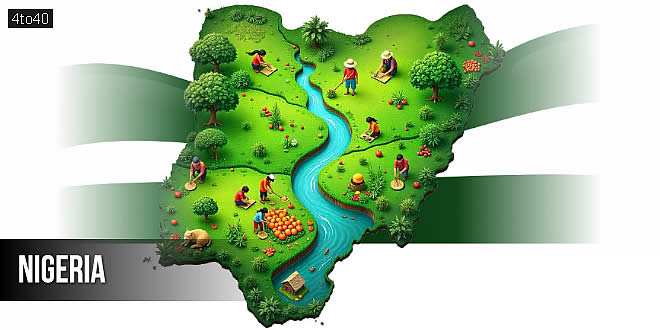
The coastal region of this large African country is low-lying. Its most distinct physiographical feature is the vast delta of the River Niger, which covers some 24,000 square kilometres. The central area is a plateau rising into mountain ranges fringing the northern and eastern frontiers. The low lying regions are densely forested; the plateau and the foothills are grassy savannas.
The mainstays of the Nigerian economy are agriculture and minerals. The country is one of the leading exporters of groundnuts, cocoa beans and palm-oil. There are large cotton fields and rubber tree plantations. Other crops include plantains, sesame, millet and fruits. Farmers raise cattle, sheep and goats from whose skins fine kid and Morocco leather is made.
Nigerian mineral resources are enormous. There are rich land and continental shelf oil-fields. In fact, the country is Africa’s largest oil producer. Especially important is the mining of tin columbite, zinc, tantalum and other ores. Forestry produces much timber and rare hardwoods such as obeche, abura and sapele.
The country has a considerable and steadily growing industrial potential. The fastest-growing industries after petro-chemicals include food-processing, building materials, timber and wood-working, and engineering. The abundance of fossil fuels and a large hydroelectrical potential constitute a dependable basis for the further development of the national economy.
Nigeria relies on its railways and roads. There is coastal, river and international shipping. The busiest airports are in Lagos and Kano, and there are also internal air services. There is an oil pipeline terminal at Bonny where supertankers can anchor.
Related Photos: