 Kids Portal For Parents India Kids Network
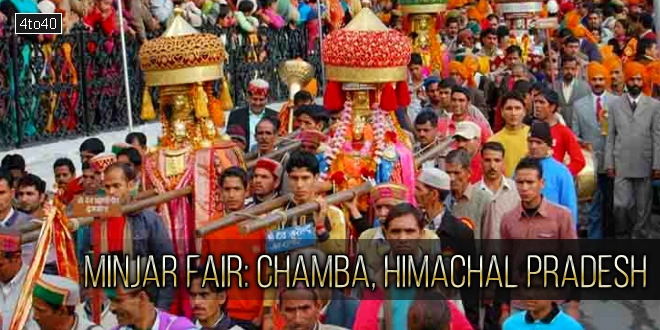
Minjar Fair is an annual fare organized in the state of Himachal Pradesh. People from all around the world gather in this time to offer prayers to the Laxmi Narayan Temple and celebrate throughout the week. The main attractions of the fair are folk singing and dancing. The fair mirrors the traditions in India in a very well manner. The fair starts with the distribution of Minjar which is a silk tassel worn on front parts of the dress by men and women alike.
When is Minjar Fair held?
The Minjar fair starts from the last Sunday of July and continues till one week with great grandeur in the state of Himachal Pradesh.
History Of Minjar fair:
Historically river Ravi used to flow between Champawati Temple and Hari Rai Temple, Because of which it was very difficult for people to reach the other temple if they were on either side.The then Raja of himachal Pradesh asked a saint to make the temple of Hari Rai accessible to people. The saint called the Raja and his people to the Champavati Temple and performed a Yaga in which various Sadhus from Benaras were also invited. These sadhus used a colored stick called Minjar to perform yaga. Surprisingly, as a result of this Yaga the course of river Ravi changed and people could easily access The temples. As the Yaga lasted for a week, therefore this fair lasts for a week.
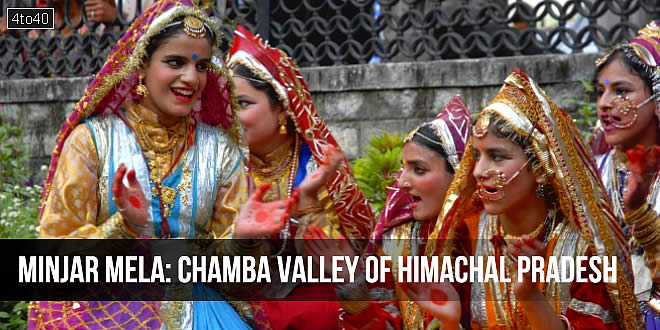
Dharamshala Chamba’s famed Minjar festival, believed to have first started in the 10th century to mark the victory of King Sahila Varma over the king of Kangra.
The centuries-old traditional Hindu fair symbolizes the blossoming of maize in the historical town, located on the banks of the Ravi River. The fair is associated with the monsoon, in which the farmers pray for heavy rain for a good harvest, is scheduled from 23 -30 July.
Minjar itself refers to silk tassels, worn by locals on their dresses that glow like maize blossoms in the sun.
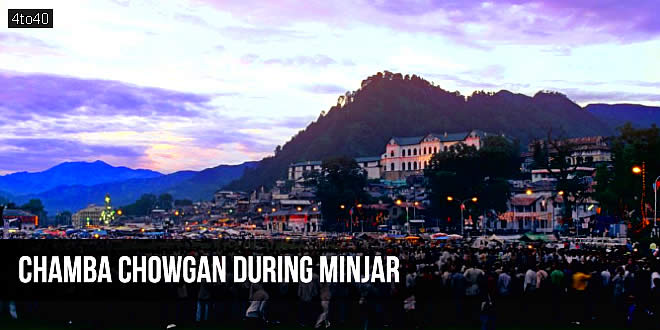
The festival will begin on July 23 with a ceremonial Puja and offering of holy Minjars at the historic Laxmi Narayan and Raghuvira temples. There will be no cultural festivities and sports activities. The Chowgan (public promenade), the main venue of the fair, will remain closed for the general public. Only some local artists will sing traditional ‘Kunjri-Malhar’ at the town’s cultural hall that will be telecast live on the local cable network. “The festival will end on August 2 with the immersion of Minjars in the Ravi,” the DC added.
Later, the palanquin of lord Raghuvira, the chief deity of the region, is led around the town in colourful procession on opening and closing day.
Symbol Of Communal Unity:
Minjar fair symbolizes not just the blossoming of maize, but also the close ties between Hindus and Muslims. The festival starts after a Muslim Mirja family offers the first holy Minjar at Laxmi Narayan temple. Muslims do the embroidery on the Minjars, a tradition that has been followed sine the festival began.
Significance:
Minjar Mela is celebrated in the Chamba valley of Himachal Pradesh, as a commemoration of the victory of the Raja of Chamba over the ruler of Trigarta (now known as Kangra), in 935 AD. It is said that on the return of their victorious king, people greeted him with sherfs of paddy and maize, as gift to symbolize prosperity and happiness.This mela is held on the second Sunday of the Shraavana month. The fair is announced by distribution of Minjar which is a silk tassel worn on some parts of the dress by men and women alike. This tassel symbolises the shoots of paddy and maize which make their appearance around this time of the year. The week long fair begins when the Minjar flag is hoisted in historical Chowgan.

Minjar is the most popular fair of Chamba which is attended by a large number of people from all over the country. This mela is held on the second Sunday of the Shraavana month. The fair is announced by distribution of Minjar which is a silk tassel worn on some parts of the dress by men and women alike. This tassel symbolises the shoots of paddy and maize which make their appearance around this time of the year. The week long fair begins when the Minjar flag is hoisted in historical Chowgan. The town of Chamba wears a colourful look with every person turning out in best attire. Sports and cultural programmes are organised. On the third Sunday the gaiety, colorfulness and enthusiasm reaches its crescendo when the colourful Minjar procession of the deities accompanied by dancing troupes, traditionally attired locals, traditional drum beaters along with Police and Home Guards band, begins its march from Akhand Chandi Palace for the venue near the Police Lines Nalhora. A great concourse of people is already assembled there. Earlier the Raja and now the chief guest throws a coconut, a rupee, a seasonal fruit and a Minjar tied in a red piece of cloth – Lohan – as offering to the river. This is followed by all the people throwing their Minjars into the river. Traditional Kumjari-Malhar is sung by the local artists. Betal leaves and ittra are offered to everyone among the invitees as a gesture of respect and festivity. Until 1943, a live buffalo used to be pushed into the river to propitiate it. It if was carried away and drowned, the event was regarded as propitious, the sacrifice having been accepted. If it crossed the river and reached the other bank, that also was auspicious as it was believed that all the sins of the town were transferred to the other side of the river.
Minjar fair has been declared as one of the state fairs of Himachal Pradesh. Wide coverage is given on TV and print media. Undoubtedly Chamba is at its very best during this fair that generally falls in the month of July / August.