 Kids Portal For Parents India Kids Network
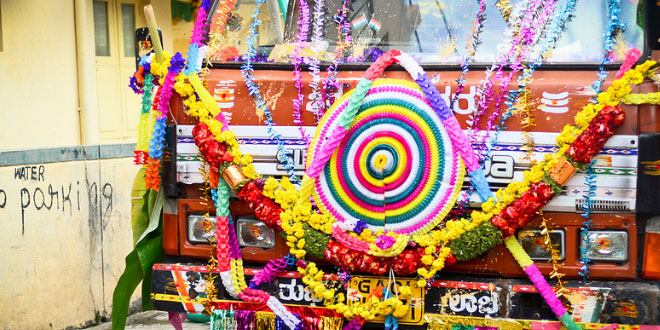
Ayudha Pooja is a part of Navratri festival in India. The festival is celebrated by different names in different states of South India. In Tamil Nadu, it is celebrated with the same enthusiasm in any other part of the country, with the rituals varying a little in tradition.
Ayudha Puja: Date
- 2025: 01 October, 2025 [Wednesday]
- 2026: 20 October, 2026 [Tuesday]
- 2027: 09 October, 2027 [Saturday]
Ayudha Pooja is celebrated on the Navami (ninth day) of the ‘Valar pirai’ (Moon’s brightening 15 days of the cycle) which usually falls in the month of September or October.
Significance of Ayudha Puja:
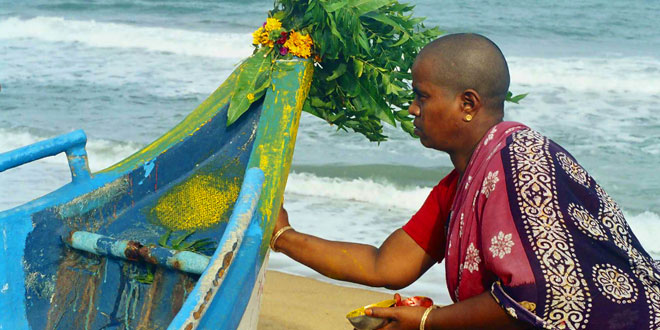
Ayudha Pooja is a day of ‘Worship of tools’. Right from the weapons used by soldiers to tools used by artists, mechanics, plumbers, welders, children’s implements like pen and pencil, tool worship is performed on this day. It is a gesture symbolizing work as worship. It can also be seen as invoking God to be a part of their implements and guide them throughout their profession. The celebration is also a form of thanksgiving to god for the wellness being bestowed upon their business.
The celebration honors all three supreme goddesses of Hindu mythology – Goddess Saraswati (goddess of wisdom), goddess Lakshmi (goddess of wealth) and Goddess Parvati (goddess of power).
Rituals for Ayudha Puja:
All machines and tools are cleaned and decorated with a tilak of sandal and kum kum. Houses are cleaned and floral decorations, festoons and garlands beautify the houses. More than houses, Ayudha Puja is considered as the prime carnival in factories and business establishments. All factories wear on a festive look with decorations. Machines and equipment are cleaned and Puja is performed in the office.
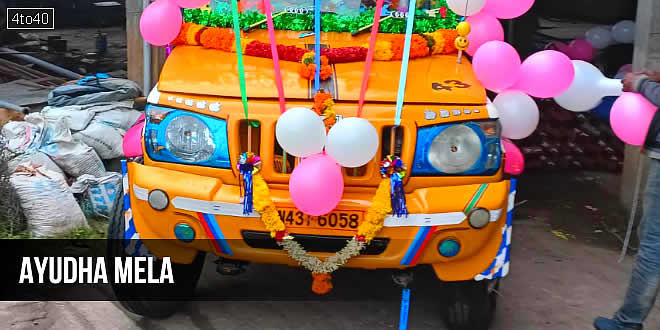
The most noteworthy aspect of the festival is the Puja performed on vehicles. All vehicles including cycles and bikes in houses to a large number of trucks, auto rickshaws and lorries in factories, vehicles are paid their due respect. All vehicles are cleaned, painted and slashed with ashes (Vibudi). Tilak of kum kum are found in vehicles with a spray on sandalwood smeared with turmeric. Garlands made of fresh flowers beautify the vehicle and in some cases, small banana trees are also tied to the vehicle. Puja is started with the lighting of incessant sticks. A coconut is broken followed by the Aarti. It is a mark of respect shown towards the vehicles that enable easy functioning of business and also a prayer to the goddess to invoke safe and secure journey in the future. In large establishments, it is a wonderful sight to see all the vehicles beautifully decorated and parked in the premises.
As a custom, sweets, fruits, beetle leaves, beetle nuts and puffed rice (Pori) is distributed to all staff members. The day is considered auspicious to initiate new ventures in business. New business trips, purchase of vehicles, lands, admission in schools are all some of the activities encouraged to be carried out on the day of Ayudha Puja.
Nomenclature:
It is celebrated in Karnataka (in erstwhile Mysore State) as ‘Ayudha Puje’.Tamil Nadu as Ayudha Pujai, in Telangana and Andhra Pradesh as Aayudha Pooja, in Kerala as Ayudha Puja, ‘Astra Puja’ or ‘Ayudha Puja’ in Odisha, ‘Shastra Puja’ or ‘Ayudha Puja/ Khande Navami’ in Maharashtra, and in Karnataka (in the erstwhile Mysore State) as ‘Ayudha Puje’.
Legend:
Two Hindu legends relate to this festival. The popular legend which was also practiced symbolically by the Maharajas of Mysore alludes to one legend. It is said that on Vijayadashami day Arjuna, third of the five Pandava brothers, retrieved his weapons of war from the hole in the shami tree where he had hidden it before proceeding on the forced exile. After completing his vanavasa (exile period) of 13 years, including one year of Agyatavas (living incognito) before embarking on the warpath against the Kauravas he retrieved his weapons. In the Kurukshetra war that ensued, Arjuna was victorious. Pandavas returned on Vijayadashami day and since then it is believed that this day is auspicious to begin any new venture. In Karnataka, Ayudha Puja is celebrated by the general public one day before the original festival day Vijayadashami (the Ayudha Puja Day).
Another legend is of a pre-battle ritual involving yagna or ritual sacrifice or as part of the Ayudha Puja (considered a sub-rite of Navaratri festival that starts after the rainy season and is propitiated before launching military campaigns). This practice is no more prevalent. The past practice is narrated in the Tamil version of Mahabharata epic. In this ritual, prevalent than in Tamil Nadu, ‘Kalapalli’ was a “sacrifice to the battlefield. Duryodhana, the Kaurava chief was advised by astrologer (Sahadeva) that the propitious time for performing Kalapalli was on amavasya day (new moon day), one day before the start of Kurukshetra war and Iravan (son of Arjuna), also spelt Aravan, had agreed to be the victim for the sacrifice. But Krishna, the benefactor of Pandavas smelt trouble and he devised a plan to persuade Iravan to be the representative of the Pandavas and also of the Kauravas. Krishna had suggested to Yudhishthira-the eldest of the Pandavas, to sacrifice Aravan to goddess Kali as a part of Ayudha Puja. After this sacrifice, Kali had blessed Pandavas for victory in the Kurukshetra war.