 Kids Portal For Parents India Kids Network
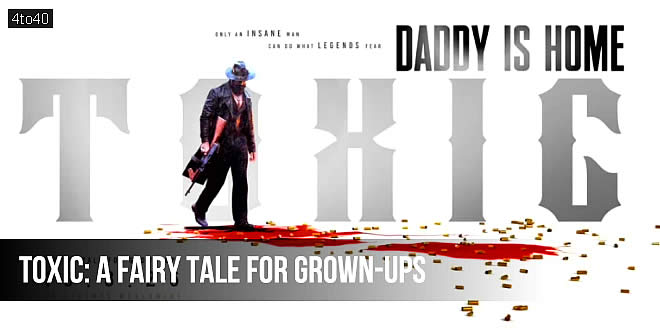
Movie Name: Toxic: A Fairy Tale for Grown-Ups
Directed by: Geetu Mohandas
Starring: Yash, Kiara Advani, Nayanthara, Huma Qureshi, Tara Sutaria, Rukmini Vasanth, Akshay Oberoi, Rahul Chavan, Utkarsh Suvarnkar, Sudev Nair, Amit Tiwari, Tovino Thomas, Darell D’Silva, Natalie Burn, Kyle Paul
Genre: Drama, Action, Thriller
Release Date: August 26, 2026
Language: Kannada, Hindi
Running Time: 194 Minutes
Rating:
Production Company: KVN Productions, Monster Mind Creations
Budget: ₹- Crore
Set in a bygone era, this gripping tale unfolds in the coastal paradise of Goa, where a powerful drug cartel pulls the strings behind a facade of sun-soaked beaches and vibrant culture.
Toxic: A Fairy Tale for Grown-Ups
Toxic: A Fairy Tale for Grown-Ups is an upcoming Indian period gangster action thriller film directed by Geetu Mohandas. It features an ensemble cast including Yash, Kiara Advani, Nayanthara, Huma Qureshi, Tara Sutaria and Rukmini Vasanth. The film is jointly produced by Venkat K. Narayana and Yash under their respective banners, KVN Productions and Monster Mind Creations.
The film was officially announced in December 2023 under the tentative title Yash 19, as it is the 19th film of Yash as a leading actor, with the official title revealed a few days later. Principal photography commenced in August 2024 in Bengaluru. The cinematography and music is handled by Rajeev Ravi and Ravi Basrur respectively. The film was simultaneously shot in Kannada and English.
It is scheduled to release in theatres worldwide on August 26, 2026.
Toxic was scheduled to be released worldwide on 19 March 2026, clashing with Dhurandhar Part 2: The Revenge and Dacoit: A Love Story, coinciding with Ugadi in 6 languages, including Kannada, Hindi, Telugu, Tamil, Malayalam and English.
Movie Trailer:
#OfficialTeaser
Ladies & Ladies-Toxic (Kannada)
Movie Review:
Yash’s kgf-esque toxic is all style, a lot of violence and little substance
Toxic begins with an immersive first 15 minutes, establishing a grand, dark and unmistakably cinematic world. There are shades of KGF in its world-building, particularly in the way it presents its larger-than-life protagonist and his violent surroundings. But unlike KGF, the world here often feels incomplete and, at times, confusing.
The film has plenty of characters, most of them nameless, but few leave a lasting impression. Its production design, however, deserves a separate round of applause. The visual splendour is undeniable, and the cinematography, set design and action blocks are all big-screen material. Several sequences look terrific and showcase the ambition behind the project.
Yet Toxic often mistakes visual grandeur for storytelling depth. The film soon begins to feel like a series of Instagram reels stitched together: each segment looks like something and feels like something, but ultimately adds up to very little. Beneath the violence, sex, swagger and scale, the screenplay needed considerably more substance.
That lack of cohesion is most evident in the craft. The editing is extremely choppy, relying heavily on the rapid-cut style audiences have come to associate with KGF. The sheer number of cuts, often without a legible point of focus is disorienting. Blood and alcohol flow endlessly, but the screenplay struggles to keep pace with the visuals.
The emotional portions do not always land as strongly as intended, making the dramatic highs feel less impactful. The screenplay is uneven, and a few loose ends are never satisfactorily tied up. Information is thrown at the audience in fragments, characters appear and disappear without enough context, relationships are introduced at dizzying speed, and action sequences frequently take precedence over establishing the stakes. The larger narrative is comprehensible, but getting there can be unnecessarily exhausting.
The action sequences reflect this imbalance. Some are brilliantly staged and make for terrific big-screen moments, while others feel excessive without leaving much of an impact. The violence is unapologetic, perhaps unlike anything seen before in a mainstream Kannada film. The first half constantly alternates between sex and violence, and at times combines the two, clearly designed to give the audience an adrenaline rush. But the effect starts wearing thin when the screenplay does not offer enough substance underneath the spectacle.
Director Geethu Mohandas keeps Yash firmly on the commercial pedal, and the speed only increases with every passing scene. Yash remains a rockstar throughout the film. His aura is unmatched, and Toxic gives him two acting playgrounds as Raya and Ticket to have a field day with. He is a treat to watch in both avatars, particularly as Ticket, where he breathes violence with every frame. The physical transformation is evident, and the amount of hard work he has put into the character shows. The physical transformation and digital de-ageing distinguish him from Raya, but it is Yash’s body language that truly creates the character. Ticket moves with an almost feral physicality, particularly during the action sequences, while his parkour-like movements give him an unusual, almost dreamlike quality. Yash goes all guns blazing and gives Toxic everything he has.
Kiara Advani is another highlight in the film. She is the calm to Raya’s chaos, and that contradiction works well. Dressed to the nines in every frame, Kiara brings a quieter emotional dimension as Nadia, becoming Raya’s emotional anchor. Their equation adds a softer counterpoint to his otherwise violent world. Yash is a treat to watch in both avatars of Raya and Ticket. Ultimately, Toxic is undoubtedly impressive in terms of scale. Its cinematography, production design, action and overall visual presentation demand to be experienced on the big screen.
Nayanthara’s character, however, has an arc that does not quite allow her to make the impact one would expect. Rukmini Vasanth, Tara Sutaria and Huma Qureshi perform their parts with ease, but none of the female characters run particularly deep or stands out. Perhaps Yash’s towering screen presence is one reason for this, but the bigger issue is the lack of character depth across the board.
The film’s soundscape adds to its commercial energy. Ravi Basrur’s music is loud and feels like an extension of the KGF soundscape. At least in Kannada, some of the songs and lyrics do not quite sit well with the narrative. The dubbing in close-up shots can also feel slightly jarring. VFX also feels a bit off in some scenes.
The final 20 minutes take the film in a completely different, almost arthouse direction. It is the kind of ending that could leave audiences either completely fascinated or thoroughly disappointed.
Ultimately, Toxic is undoubtedly impressive in terms of scale. Its cinematography, production design, action and overall visual presentation demand to be experienced on the big screen. There is no denying the ambition behind the project. But ambition alone cannot hold a film together.
Toxic has style and violence in abundance, but substance in short supply. The screenplay is uneven, the runtime feels excessive, several characters are underdeveloped, and the emotional beats do not always hit home. Beneath the guns, bloodshed, machismo and spectacle is a potentially compelling story about abandonment, inherited trauma, masculine violence and the complicated relationship between fathers and sons. The film clearly knows what it wants to say. It just doesn’t always know how to make us feel it.
Still, if you are a Yash fan, there is plenty to enjoy. His screen presence, action sequences, set design and world-building, and larger-than-life performance make Toxic worth watching on the big screen.







2 comments
Pingback: Top 10 Tamil Songs June 2026: Best Kollywood Songs Ranking, Title, Best Album – Kids Portal For Parents
Pingback: Kaaka: 2027 Chiranjeevi Telugu Action Thriller Film Trailer & Review – Kids Portal For Parents