Science & Mathematics Questions & Answers

Science & Mathematics Questions & Answers

How does a coconut kernel get filled with water and why doesn’t it evaporate?

How does a coconut kernel get filled with water and why doesn't it evaporate?

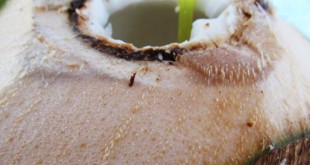
The nutritive watery juice of a young coconut kernel is supplied to the fruit by the plant through its conductive tissues (xylem and phloem). The coconut fruit has a three-layered wall_the husky outermost epicarp, followed by the fibrous mesocarp and the innermost endocarp. The endocarp is impervious to air and water an hence, prevents the juice from evaporating. Funny Logic …

Read More »

How is the age of a tree determined?

How is the age of a tree determined?

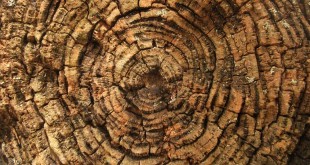
Trees or plants have a varied requirement of water which is determined by the kind of humidity, temperature, sunlight and water sources they are exposed to. Depending on the degree of evaporation of water from the plant, a narrow or a broad ring is formed on the stem. One ring indicates one year of growth in a tree. So the …

Read More »

Why does the mouth become dry when there is a feeling of apprehension, concern or fear?

Why does the mouth become dry when there is a feeling of apprehension, concern or fear?

Apprehension, concern or fear stimulates the sympathetic nervous system of the body. Sympathetic stimulation has a direct effect on glandular cells of salivary glands. That causes reduced secretion of salivary glands because sympathetic stimulation causes vasoconstriction of blood vessels supplying the salivary glands. It also causes the formation of concentrated secretion. As a result, the mouth feels dry whenever there …

Read More »

Why do we break our knuckles and where does the sound comes from?

Why do we break our knuckles and where does the sound comes from?

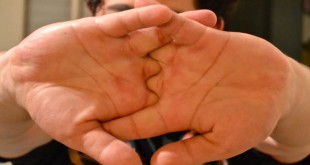
The knuckle joint is called the “ball and socket” joint or the synovial joint. The space between the two bones, which form the joint, is filled with the synovial joint. The space between the two bones, which form the joint, is filled with the synovial fluid. During metabolism, bubbles of carbon dioxide accumulate in the fluid. When we break our …

Read More »

Why is the Taj Trapezium Zone and why is it called so?

Taj Trapezium Zone (TTZ) is a defined area of 10,400 sq km around the Taj Mahal to protect the monument from pollution. The Supreme Court of India delivered a ruling on December 30, 1996 regarding industries covered under the TTZ, in response to a PIL seeking to protect the Taj Mahal from environmental pollution. It banned the use of coal/ …

Read More »

Why does the spider family bear the name Archnida?

Ages ago, people believed there was magic in the weaving of a spider’s web and the Greeks told a story about a girl, Arachne, who was to give all spiders the name of Arachnida. One day, Archne, who was skilled in the art of weaving, challenged the goddess to a contest. She proved herself better than Athene at the craft …

Read More »

Why does the Hermit Crab live in a shell?

The hermit Crab is soft-bodied and so would be extremely vulnerable to its enemies if it had no protection at all. For some reason it has become adapted over time to living within the old shells of mollusks, usually whelks but sometimes periwinkles and top shells. Only two pairs of legs are used for walking, the grip the shell and …

Read More »