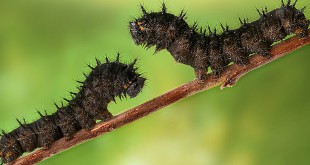
Silk is the natural fiber produced by silkworms and is made from the juice secreted from the mouth of these insects. Silkworms are fed on the leaves of mulberry trees. In about 25 days, they make cocoons around themselves. One-fifth of the weight of a cocoon is silk. The silkworms are killed in hot water and silk is spun out. …
Read More »Why do we blush?
When we blush, we go red in the face, particularly in the cheeks and neck. Sudden emotion, such as embarrassment, a sense of shame or pleasure, causes the very small blood vessels just below the surface of the skin to deflate. As these capillaries are full of blood the skin look red. Blushing is most noticeable on a pale-skinned person. …
Read More »Why do we break our knuckles and where does the sound comes from?
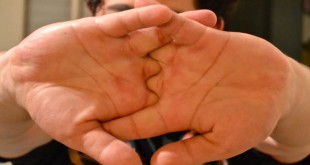
The knuckle joint is called the “ball and socket” joint or the synovial joint. The space between the two bones, which form the joint, is filled with the synovial joint. The space between the two bones, which form the joint, is filled with the synovial fluid. During metabolism, bubbles of carbon dioxide accumulate in the fluid. When we break our …
Read More »Why is the Taj Trapezium Zone and why is it called so?
Taj Trapezium Zone (TTZ) is a defined area of 10,400 sq km around the Taj Mahal to protect the monument from pollution. The Supreme Court of India delivered a ruling on December 30, 1996 regarding industries covered under the TTZ, in response to a PIL seeking to protect the Taj Mahal from environmental pollution. It banned the use of coal/ …
Read More »Why does the spider family bear the name Archnida?
Ages ago, people believed there was magic in the weaving of a spider’s web and the Greeks told a story about a girl, Arachne, who was to give all spiders the name of Arachnida. One day, Archne, who was skilled in the art of weaving, challenged the goddess to a contest. She proved herself better than Athene at the craft …
Read More »Why does the learning tower of Pisa lean?
The Leaning Tower of Pisa is a marble bell tower at Pisa, Italy. Even though the tower has been leaning since it was under construction, it has stood for hundreds of years, despite the fact that it looks as if it will fall any minute. The tower was begun over 800 years ago, in 1174, and completed in 1350. After …
Read More »Why does the Hermit Crab live in a shell?
The hermit Crab is soft-bodied and so would be extremely vulnerable to its enemies if it had no protection at all. For some reason it has become adapted over time to living within the old shells of mollusks, usually whelks but sometimes periwinkles and top shells. Only two pairs of legs are used for walking, the grip the shell and …
Read More »Why does a lizard shed it’s tail?
A lizard is capable of shedding its tail at any time. If a lizard is attacked it may sacrifice its tail in an attempt to surprise and confuse the enemy. When a lizard’s tail is caught by an assailant or a trap, it will simply snap off and enable the reptile to escape. Although some lizards’ tails can be four …
Read More »Why does a dowser, or diviner, use a Y-shaped hazel or willow twig?
Dowsing is an ancient way of finding water. The dowser holds one end of the Y-shaped twig in each hand, and walks around until the stem twitches downward, showing where is buried.
Read More »Why do wells dry up?
Rainwater that sleeps into the ground filters down to the zone of saturation, where every crack in the rock is filled with water. (Below this point compact rocks stop the water going any deeper.) The top level of the zone of saturation is called the water table. This level rises and falls according to the weather, and walls sunk down …
Read More »
Kids Portal For Parents India Kids Network