 Kids Portal For Parents India Kids Network
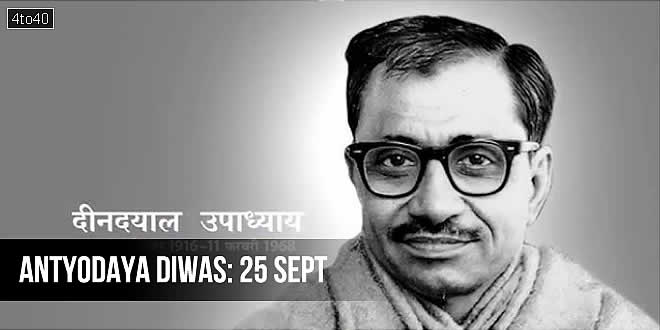
Antyodaya Diwas: It is celebrated on September 25, to commemorate the birth anniversary of the moral inspiration and BJP’s key ideologue Pandit Deendayal Upadhyaya. Let us have a look at some interesting facts about Pandit Deendayal Upadhyaya.
Antyodaya Diwas: Date
- 2025: 25 September, 2025 [Thursday]
- 2026: 25 September, 2026 [Friday]
- 2027: 25 September, 2027 [Saturday]
- 2028: 25 September, 2028 [Monday]
It is celebrated on September 25 to mark the birth anniversary of BJP’s key ideologue Pandit Deendayal Upadhyaya. He was a humanist, journalist, philosopher, economist, and political activist. On his birth anniversary, let us have a look at some interesting facts about him.
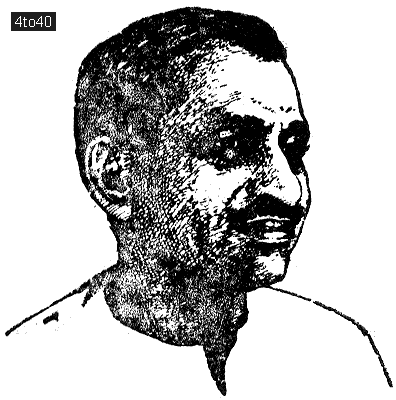
Who was Pandit Deendayal Upadhyaya?
Pandit Deendayal Upadhyaya was an eminent Indian leader, co-founder of the Bharatiya Jana Sangh (BJS), and a prominent thinker associated with the Rashtriya Swayamsevak Sangh (RSS). This day serves as a tribute to his life and lasting legacy, honoring one of India’s most influential political figures. The details of his early life, achievements, and key ideas is presented in the table below:
| CATEGORY | DETAILS |
| Birth: | Born on September 25, 1916, in the village of Nagla Chandrabhan, Mathura district, Uttar Pradesh. |
| Early Life: | Lost his parents at a young age and was raised by his maternal uncle. Excelled academically and received his B.A. from Sanatan Dharma College, Kanpur in 1937. |
| Political Involvement: | Joined the Rashtriya Swayamsevak Sangh (RSS) in 1937 and rose to prominence. Co-founded the Bharatiya Jana Sangh (BJS) in 1951 and served as its General Secretary (1951–1968). |
| Assassination: | Killed on February 11, 1968, in Lucknow, Uttar Pradesh, at the age of 51. |
| Legacy: | Prolific writer and thinker on politics, economics, and religion. Famous work: “Integral Humanism”, outlining his philosophy of a society based on truth, justice, and non-violence. |
| Key Contributions: | Co-founder of BJS, developed the philosophy of Antyodaya (upliftment of the last person), wrote extensively, and his work on Integral Humanism influenced multiple fields. |
| Ideas and Beliefs: | Antyodaya– Advocated that the poorest and most marginalized should be prioritized in development programs, influencing BJP’s social welfare focus.
Integral Humanism– Believed in a just and equitable society grounded in truth, justice, and non-violence, applicable to all irrespective of religion, caste, or social status. Swadeshi– Promoted the use of Indian-made goods for economic independence and national development. Dharma Rajya– Advocated for a state based on dharma, encompassing religion, morality, and social order. |
History of Antyodaya Diwas:
Antyodaya Diwas is celebrated annually in India on September 25 to mark the birth anniversary of Pandit Deendayal Upadhyaya. Upadhyaya was a prominent Indian leader, thinker, and economist. He was a co-founder of the Bharatiya Jana Sangh (BJS), the predecessor of the Bharatiya Janata Party (BJP).
- Antyodaya Diwas is a day to reaffirm the commitment to Upadhyaya’s philosophy of Antyodaya, which means “upliftment of the last person.”
- It is a day to remember the importance of serving the poorest and most marginalized members of society.
- On Antyodaya Diwas, several events are held across India to raise awareness of Upadhyaya’s life and work.
- These events include seminars, workshops, and exhibitions.
- The government of India also organizes several programs on Antyodaya Diwas, such as the Antyodaya Anna Yojana (AAY), a food security program for the poorest of the poor.
Antyodaya Diwas is a reminder that we all have a role to play in uplifting the poorest and most marginalized members of society. It is a day to recommit ourselves to working towards a more just and equitable society.
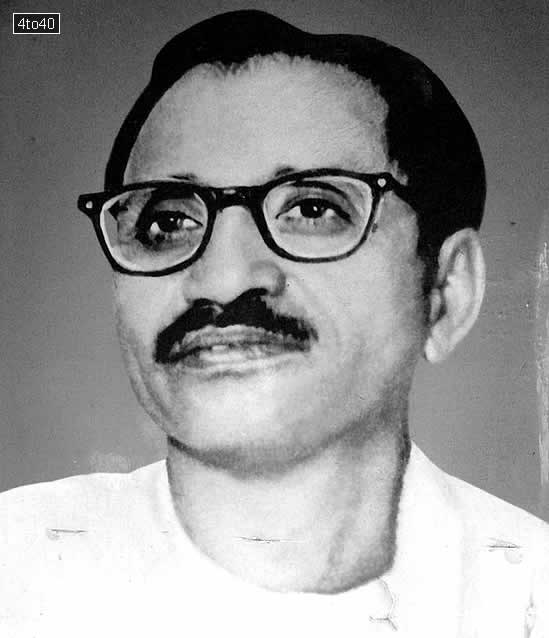
Significance:
Antyodaya Diwas is a significant day for several reasons:
- It is a day to remember and celebrate the life and work of Pandit Deendayal Upadhyaya, a prominent Indian leader, thinker, and economist.
- It is a day to reaffirm the commitment to Upadhyaya’s philosophy of Antyodaya, which means “upliftment of the last person.”
- It is a day to raise awareness of the importance of serving the poorest and most marginalized members of society.
- It is a day to recommit ourselves to working towards a more just and equitable society.
Key Facts about Pandit Deendayal Upadhyaya:
- On 25 September 1916, he was born in the village Chandrabhan, now known as Deendayal Dham, near Farah town in Mathura District. His father’s name was Bhagwati Prasad and he was an astrologer. The mother’s name was Rampyari. When he was eight years old, his both parents died and he was brought up by his maternal uncle.
- Under the guardianship of his maternal uncle and aunt he did his education and went to high school in Rajasthan where he completed matriculation. He did his intermediate from Birla College in Pilani, B. A from Sanatan Dharma College, Kanpur in 1939. To pursue a master’s degree in English literature he joined St. John’s College, Agra but was not able to complete it. He joined Rashtriya Swayamsewak Sangh (RSS) as its full-time worker known as Pracharak.
- In 1942, he started full-time work in the RSS and became a lifelong Pracharak. There, he met the founder of the party, KB Hedgewar, and underwent a 40-day camp in Sangh Education and a second-year training in the RSS Education Wing.
- In the 1940s he started the monthly Rashtriya Dharma from Lucknow for spreading the ideology of Hindutva nationalism. Later, he also started Panchjanya and daily Swadesh.
- He became the first General Secretary of the Uttar Pradesh branch of the Bharatiya Jan Sangh when it was founded in 1951. Thereafter, he was appointed its All-India General Secretary. For 15 years, he remained the outfit’s general secretary.
- Apart from all his organisational capabilities he was also known for his philosophical and literary works. He developed the concept of ‘Integral Humanism’ which advocated the holistic development of the mind, body, intellect, and soul, of every individual.
- He was convinced that as an independent nation, India could not rely upon Western concepts including individualism, democracy, socialism, communism or capitalism.
- He always believed that the Indian intellect was dominated by Western theories. He welcomed modern technology but as per the Indian requirements. He always believed in Swaraj which is self-governance.
- He was elected the president of the Jana Sangh in December 1967. On 11 February 1968, he was murdered under mysterious circumstances while travelling. His body was found near the Mughalsarai railway station in Uttar Pradesh.
- Some of his literary works include the play “Chandragupta Maurya” and a translation of a biography of Dr. K.B. Hedgewar, which was originally written in Marathi. He also composed a biography of Adi Shankara (Shankaracharya), the 9th-century Hindu reformer.
His legacy is very much alive in India today in the form of the ideology of the Bharatiya Janata Party which emerged from the Bharatiya Jana Sangh.
- Several institutions in recognition of his leadership have been named after him like the Deen Dayal Upadhyaya Hospital in West Delhi; the Deen Dayal Upadhyaya University, in Gorakhpur in Uttar Pradesh; and the Pandit Deen Dayal Petroleum University, in Gandhinagar, Gujarat.
Some of his thoughts are:
- Western Science and Western Ways of Life are two different things. Whereas Western Science is Universal and must be absorbed by us if we wish to go forward, the same is not true about the Western Ways of life and values.
- Here in Bharat, we have placed before ourselves the ideal of the fourfold responsibilities of catering to the needs of Body, Mind, Intellect, and Soul with a view to achieving the integrated progress of Man.
- No doubt, he dedicated his life to social causes and the Bharatiya Jana Sangh Party. He never married but several young party workers looked at him as an inspirational father figure during his lifetime.
Key Takeaways from this article:
Below are the key takeaways of Antyodaya Diwas:
- Antyodaya Diwas, observed annually on September 25, honors the birth anniversary of Pandit Deendayal Upadhyaya.
- The day serves as a reminder of our collective responsibility to uplift the poorest and most marginalized members of society.
- Encourages reflection on progress made and recognition of challenges that remain in social welfare and inclusive development.
- Highlights the enduring legacy of Upadhyaya and his philosophy of Antyodaya, emphasizing the importance of supporting the last person in society.
- Inspires individuals to embrace values of equity, social justice, and national harmony, contributing to a better and inclusive future for all.