Karva is another word for ‘pot’ (a small earthen pot of water) and chauth means ‘fourth’ in Hindi (a reference to the fact that the festival falls on the fourth day of the dark-fortnight, or krishna paksha, of the month of Kartik). The festival originated and came to be celebrated only in the northwestern part of the Indian subcontinent. One hypothesis is that military campaigns were often conducted by men in far off places whereby men would often leave their wives and children to go off to war. Their wives would often pray for their safe return. The festival also coincides with the wheat-sowing time (i.e., the beginning of the Rabi crop cycle). Big earthen pots in which wheat is stored are sometimes called Karvas, so the fast may have begun as a prayer for a good harvest in this predominantly wheat-eating region.
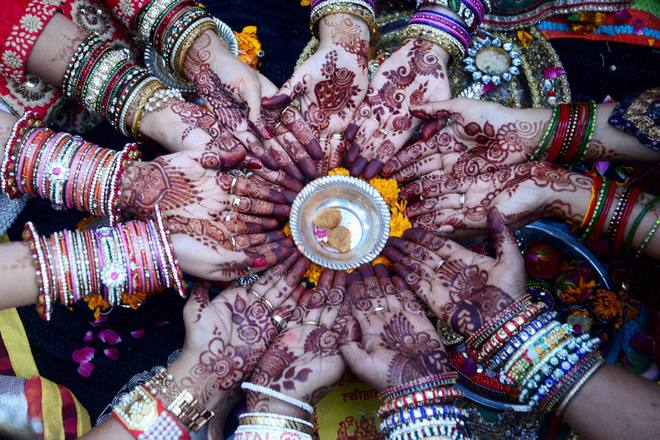
Jammu woman shows her hands decorated with henna
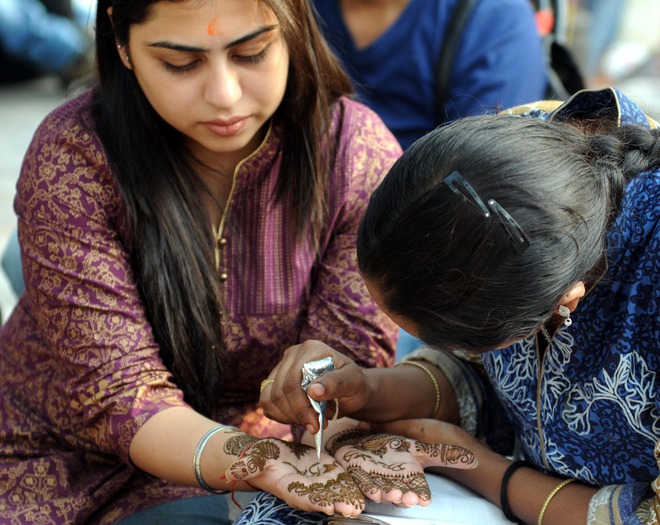
Hindu woman shows her hand decorated with henna ahead of the Karwa Chauth
Women purchase bangles from a shop ahead of the Karwa Chauth
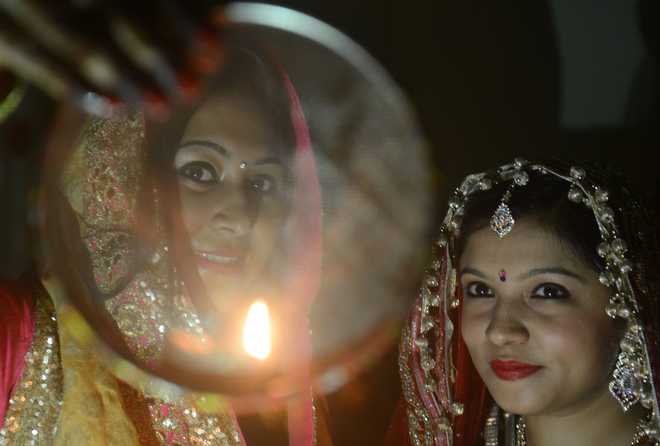
Women only eat food or drink water after making offering to the moon
Sadar Bazaar Market ahead of Karwa Chauth and Diwali Festival in New Delhi
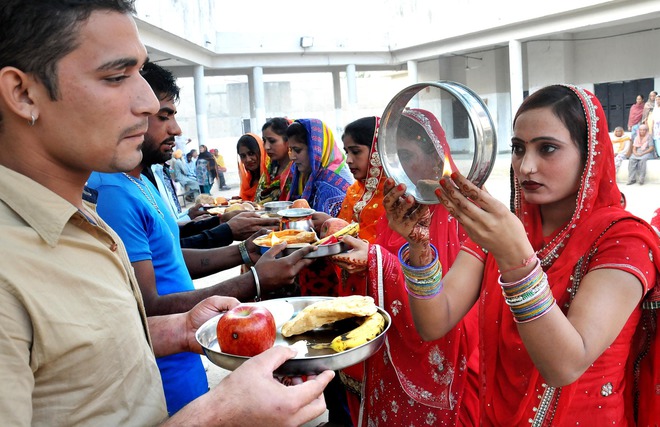
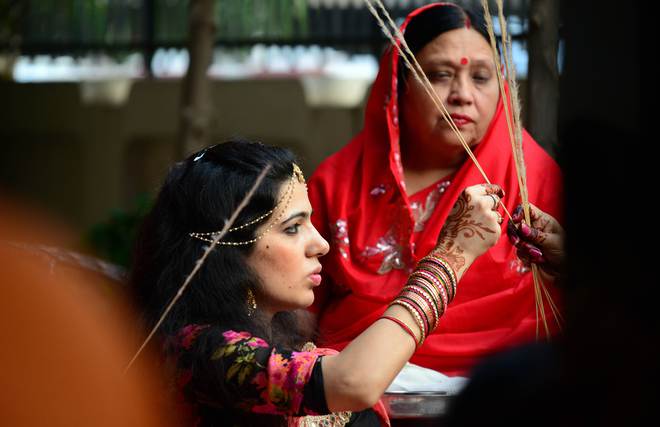
Female inmates see their husbands’ faces through sieves on Karwa Chauth, a traditional Hindu festival celebrated in northern India during which married women fast one whole day and offer prayers to the moon for the welfare, prosperity, and longevity of their husbands, at Modern Jail, Kapurthala, on October 30, 2015
Indian Hindu married women perform a ritual on Karwa Chauth, a traditional Hindu festival celebrated in northern India during which married women fast one whole day and offer prayers to the moon for the welfare, prosperity, and longevity of their husbands, in Siliguri on October 30, 2015
Indian married Hindu women perform rituals during Karwa Chauth, a traditional Hindu festival celebrated in northern India during which married women fast one whole day and offer prayers to the moon for the welfare, prosperity, and longevity of their husbands, in Allahabad on October 22, 2015
Indian married Hindu women perform rituals during Karwa Chauth, a traditional Hindu festival celebrated in northern India during which married women fast one whole day and offer prayers to the moon for the welfare, prosperity, and longevity of their husbands, in Allahabad on October 30, 2015
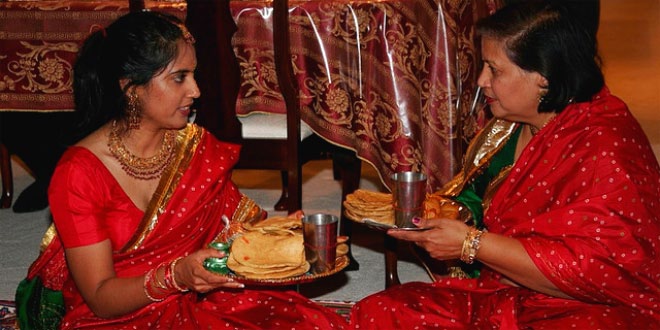
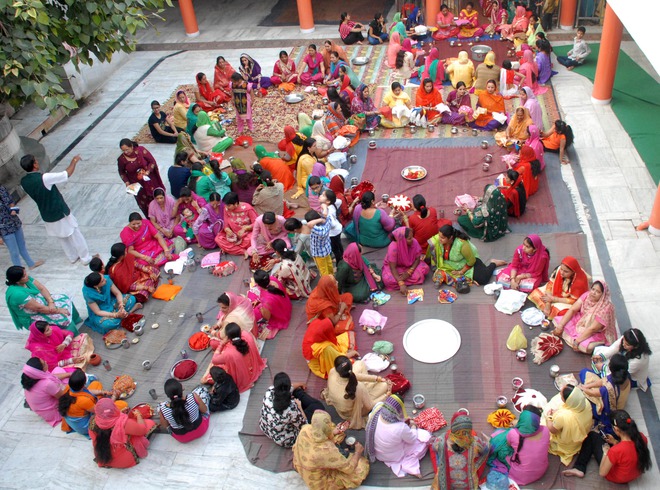
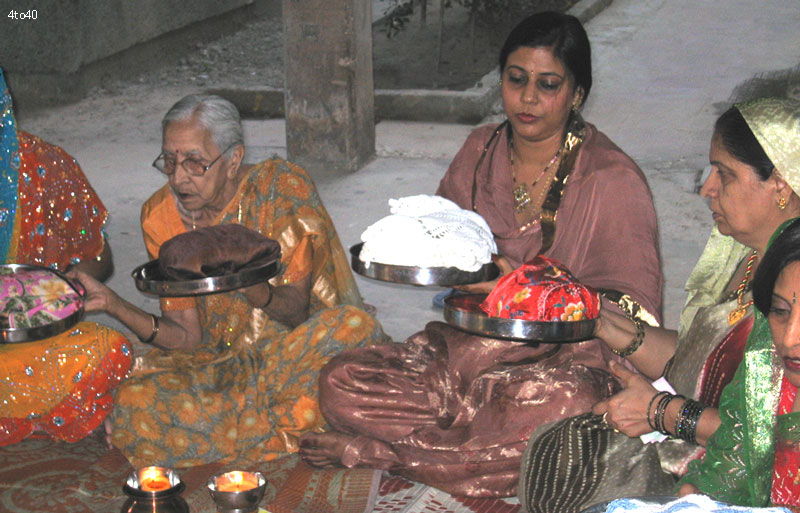
Married women exchange thalis while offering prayers for their husbands’ welfare, prosperity, and longevity on Karwa Chauth, a traditional Hindu festival celebrated in northern India during which married women fast one whole day and offer prayers to the moon for the welfare, prosperity, and longevity of their husbands, at a temple in Amritsar on October 30, 2015
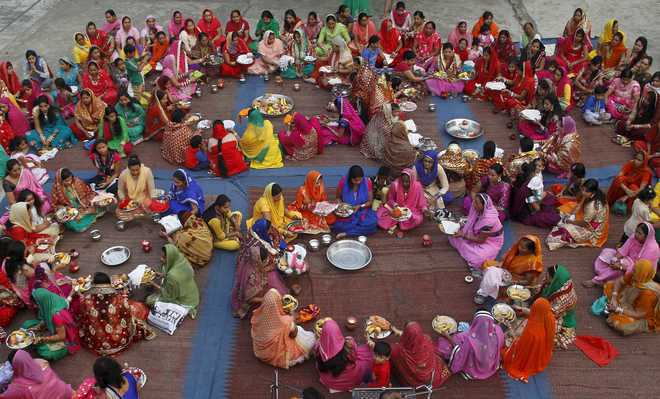
Women a perform ritual on Karva Chauth, traditional Hindu festival celebrated in northern India during which married women fast one whole day and offer prayers to the moon for the welfare, prosperity, and longevity of their husbands, in Ahmedabad on October 22, 2015
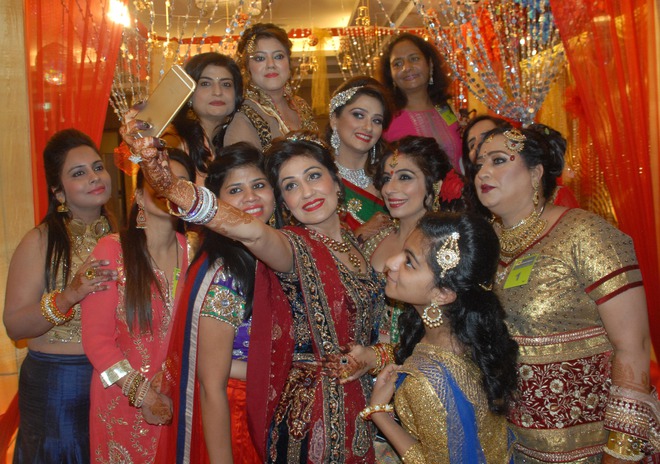
Women click selfies during a function organised to mark Karwa Chauth, a traditional Hindu festival celebrated in northern India during which married women fast one whole day and offer prayers to the moon for the welfare, prosperity, and longevity of their husbands, in Amritsar on October 30, 2015
Women gets henna applied to her palms on the eve of Karwa Chauth, a traditional Hindu festival celebrated in northern India during which married women fast one whole day and offer prayers to the moon for the welfare, prosperity, and longevity of their husbands, in New Delhi on October 22, 2015
Women pray during Karwa Chauth, a traditional Hindu festival celebrated in northern India during which married women fast one whole day and offer prayers to the moon for the welfare, prosperity, and longevity of their husbands, on the premises of a temple in Chandigarh on October 30, 2015
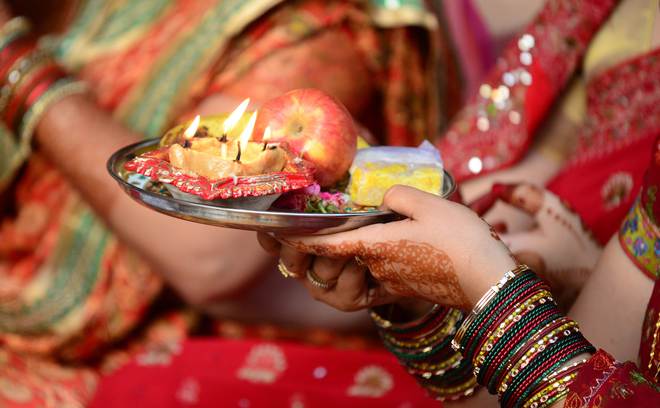
Hindu married women circulating Baya Thalis on the ocassion of Karva Chauth festival
 Kids Portal For Parents India Kids Network