 Kids Portal For Parents India Kids Network
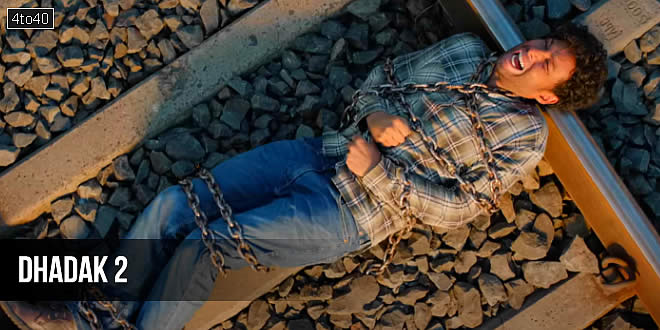
Movie Name: Dhadak 2
Directed by: Shazia Iqbal
Starring: Triptii Dimri, Siddhant Chaturvedi, Zakir Hussain, Saurabh Sachdeva
Genre: Romance, Drama, Mystery, Thriller
Running Time: 142 Minutes
Release Date: 01 August, 2025
Rating:
Production Companies: Zee Studios, Dharma Productions, Cloud 9 Pictures
Budget: ₹– crore
A searing romantic drama about identity, power, and the cost of love in the world we live in.
Dhadak 2: Movie Overview
Dhadak 2 is an upcoming Indian Hindi-language romantic drama film written and directed by Shazia Iqbal and produced by Dharma Productions, Zee Studios and Cloud 9 Pictures. A spiritual sequel to Dhadak (2018) and a remake of the Tamil film Pariyerum Perumal (2018), it stars Triptii Dimri and Siddhant Chaturvedi.
Dhadak 2 began pre-production in April 2023, with Triptii Dimri and Siddhant Chaturvedi leading the cast under the production of Karan Johar. The film’s official announcement was made on 15 May 2025, introducing the characters of Dimri and Chaturvedi in a musical teaser. Principal photography will be on November 2024.
The music of the film is composed by Rochak Kohli, Tanishk Bagchi, Javed-Mohsin and Shreyas Puranik while the lyrics is written by Rashmi Virag, Siddharth–Garima, Gurpreet Saini and Ozil Dalal.
The film was scheduled to release theatrically on 22 November 2024 but has been postponed to February 21, 2025 to 1 August 2025 but all dates were missed.
Movie Trailer:
Movie Review:
Siddhant Chaturvedi, Triptii Dimri star in a timely but prosaic version of ‘Pariyerum Perumal’
In ‘Dhadak 2’, director Shazia Iqbal makes a brave statement on everyday caste discrimination in society, but the parts of speech don’t add up to create a consistently stirring experience
It is heartening that, in the pan-Indian wave, once in a while, a socially conscious story from the south also lands on Bollywood’s shores. In Dhadak 2, a remake of the Tamil film Pariyerum Perumal, where caste becomes the villain in a young romance, debutant director Shazia Iqbal struggles to strike a balance between retaining the voice of the original and applying a Dharma polish to a social reality that has been mainly out of the syllabus for Bollywood biggies.
The result is a mixed bag. While it is brave for Bollywood standards, the storytelling fails to provide a lived-in experience and becomes a kind of explainer on how Dalit lives matter for the Kuch Kuch Hota Hai audience.
It reminds me of the generation loss between Nagraj Manjule’s Sairat and Dharma’s Dhadak, directed by Shashank Khaitan. The transplanted heart pumps the same amount of blood, but its beat, the dhadak, sounds a bit muted and a little false. Dhadak rekindled the romance of the original Marathi source, with music and ambiance playing a significant role, but the caste angle was utterly compromised. Here, the spiritual sequel doesn’t stir the romance enough for the clearly spelled out caste conflict to take over the senses.
Set in a space that exists between the bucolic and the brutal, the Mari Selvaraj film had a poetic, dream-like quality that conveyed how the pernicious caste discrimination present in society scuttles a young romance, where the girl takes the first step. Her ignorance about the social realities and the stigma that her Dalit boyfriend carries work like she exists in an age of innocence. She becomes a metaphor for reaching out to a section of society that feels all is well. The psychopathic thatha, who takes upon himself the task to maintain purity of the gene pool, was positioned as the old order that refuses to change with the times and strikes in surreptitious ways.
Shazia has retained all the elements of the original; however, the subject loses the ethereal layer between romance and reality during the journey from rural to the curated urban milieu. It becomes a relatively straightforward narrative that addresses multiple issues, but fails to create an emotional impact. It works rather mechanically, with a Rohit Vemulla-like character positioned here, a short lecture on the idea of honour there, and a paragraph on identity in between. Usually, music fills the gaps, but here the score remains underwhelming.
More importantly, here, the girl’s ignorance doesn’t translate into innocence, and in fact, it becomes irritating after a point. Shazia, who previously directed the powerful Bebaak, wants to give Vidhi (Triptii), a law student whose name means “rule” or “rite,” a voice. Vidhi wants to indulge in rapid fire, but keeps ignoring the patriarchy and the stench of caste pride floating around her living space.
Early in the film, she tells Neelesh (Siddhant Chaturvedi) how she shunned the toxic masculinity of her previous boyfriend, but doesn’t try to understand if the docility of her beloved is a result of his social status. When she throws herself in his arms, he doesn’t hold her because centuries of untouchability freeze his hands. There is a lot of untapped potential between the lines that doesn’t translate. She takes the whole film to realise that her cousin’s opposition to her friendship with Neelesh is because of his caste.
The problem escalates because Triptii overdoes her character-defining trait, which is perhaps ‘bubbly,’ and fails to convey what’s not on paper. As for the ambiance, the law college resembles a small-town branch of the academic institutions we have seen in the Dharma universe in the past, where the contours of the SC/ST (Prevention of Atrocities) Amendment Act 2015 are never discussed, let alone tested in a police station.
Surprisingly, Neelesh never employs the tool that his mother, who understands political resistance, wanted him to master to become an Ambedkar and overcome everyday discrimination. When the teacher targets him for being from the ‘quota’, Neelesh doesn’t escalate the issue to the well-meaning Muslim principal (Zakir Hussain), who also hails from a backward section of his community. When an activist senior asks him to join the mission, Neelesh says he doesn’t want to get into politics and doesn’t see a pen as a sword. However, when the push comes to a shove, the film forgets that in the Dalit movement, pen still holds value. Even Vidhi’s father fears that he might get them booked, but Shazia doesn’t give Neelesh that option.
Of course, a social contract is as good as the people it binds, but the process of circumvention and resistance is much more layered in society than what the film depicts. Harish Khanna, as the girl’s lawyer father, expresses this complexity and helplessness well. Wish he had been given a better character arc. Siddhant delivers an honest performance as the boy struggling between his ambition and his identity, and Saurabh Sachdeva, as the psychopath who considers himself a divine-ordained vigilante to maintain caste order, once again excels in his part. The second part of the second half captures the audience’s attention as ambition finally meets expression. Still, overall, it remains a film that highlights multiple issues but doesn’t construct a compelling narrative around them.
Movie Songs:
Song Title: Bas Ek Dhadak
Lyrics: Rashmi Virag
Music Composer: Javed-Mohsin
Singers: Shreya Ghoshal & Jubin Nautiyal
Song Title: Duniya Alag
Lyrics: Siddharth-Garima
Music Composer: Shreyas Puranik
Singers: Arijit Singh
Song Title: Preet Re
Lyrics: Gurpreet Saini
Music Composer: Rochak Kohli
Singers: Darshan Raval, Jonita Gandhi & Rochak Kohli