 Kids Portal For Parents India Kids Network
कैसे फटता है बादल: What is meant by cloud burst? हिमाचल प्रदेश के कुल्लू में बीते दिनों अचानक बादल फट गया और बाढ़ जैसी स्थिति उत्पन्न हो गई। यह घटना सैंज घाटी में हुई। बादल फटने से भारी नुकसान होता है। चलिए जानते हैं कि बादल फटना क्या होता है और यह पहाड़ी इलाकों में क्यों होता है।
कैसे फटता है बादल:
आमतौर पर बादल फटने को लेकर हर किसी के मन में एक ही तस्वीर उठती है कि गुब्बारे की तरह बादल फट गया और वहां बाढ़ आ गई लेकिन ऐसा नहीं होता। बादल फटना एक टैक्निकल टर्म होती है। वैज्ञानिकों की भाषा में कहें तो जहां पर एक घंटे में 100 एम.एम. तक बारिश हो जाती है, उसको बादल फटना कहा जाता है।
सामान्य तौर पर जमीन से 12 से 15 किलोमीटर की ऊंचाई पर जो बारिश होती है, उसे ही बादल फटना माना जाता है। इससे वहां मूसलाधार से भी तेज बारिश होती है और इस घटना को ‘क्लाऊडबर्स्ट (cloud burst)’ कहा जाता है। बादल फटने की घटना तब होती है, जब पानी से भरे बादल एक निश्चित स्थान पर रुक जाते हैं और उनमें मौजूद पानी की बूंदें एक साथ आ जाती हैं। इनके भार की वजह से बादलों का घनत्व बढ़ जाता है, इसलिए भारी बारिश होती है। माना जाता है कि जहां बादल फटता है, वहां पर 100 लीटर प्रति घंटे के हिसाब से बारिश होती है।
बादल तब फटते हैं, जब उनमें भारी मात्रा में नमी या पानी होता है और उनके रास्ते में अचानक कोई बाधा आ जाती है, तो वे फट जाते हैं।
पहाड़ों पर ही क्यों:
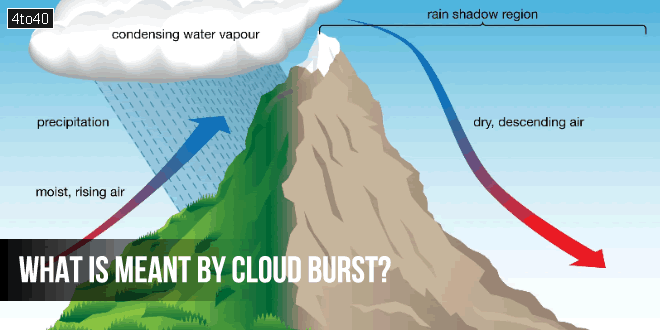
बरसात का मौसम आते ही पहाड़ी इलाकों में सबसे ज्यादा बादल फटने की घटना देखने को मिलती है। पहाड़ों पर पानी से भरे बादल जब हवा के साथ आगे बढ़ते हैं तो पहाड़ों के बीच में फंस जाते हैं। ऊंचाई इनके रास्ते में बाधा बनती है और ये आगे नहीं बढ़ पाते। पहाड़ों की तरफ बढ़ते ही बादल बारिश के रूप में बदलते हैं और इनका धनत्व बहुत ज्यादा होने की वजह से बहुत तेज बारिश होती है।
आमतौर पर मैदानी इलाकों में बादल फटने की घटनाएं सुनने को नहीं मिलतीं, लेकिन अगर गर्म हवा का झोंका बादलों की तरफ मुड़ जाए, तो भी बादल फट सकते हैं।
What are Cloudbursts? Should we be prepared for more frequent occurrences?
The 2013 flash floods caused by a cloudburst in Uttarakhand has been one of the worst natural disasters the country has recorded since the 2004 tsunami.
On July 22nd 2023, over a dozen houses and shops in Leh, Ladakh suffered partial damage after cloudburst triggered flashfloods. Shimla, Srinagar, Kinnaur and Kullu districts also experienced cloudbursts this month.
This has become a common event. Each year the number of cloudbursts recorded are rising. In 2021, Himachal Pradesh recorded around 30 cloudburst events and Uttarakhand 50. In 2022, flash floods that followed a cloudburst near Amarnath caves in Jammu & Kashmir left 17 dead.
Climate change has been making these extreme weather events more frequent and intense, according to meteorologists. But, why do cloudbursts happen and why this region?
A cloudburst is a sudden spell of localised, heavy rainfall where the amount of rainfall over a particular area exceeds 100 millimetres in an hour.
They often result in flash floods and have become increasingly common from May-September when the southwest monsoon season prevails in much of the country. The phenomenon that is responsible for this is ‘orographic lift’, a process by which clouds that are already to rain are pushed up by warm air currents.
As they reach higher elevations, the water droplets within the clouds become bigger and new ones are formed. These dense clouds eventually burst, unable to hold the large volume of moisture. This results in torrential downpours in the region right below and leads to overflowing of water bodies in a very short duration of time.
The phenomenon is more common in mountainous areas because they offer the terrain for moisture-laden air to rise swiftly along the mountain slopes.
A doppler-radar system is ideal for predicting the calamity and after the 2013 calamity, demands were made to equip monitoring stations in cloudburst-prone areas with this system.
In Ladakh, the heavy rains caused damage to Leh-Nubra road at Khardong and Khalsar villages. Standing agricultural crops were also damaged due to these floods in some areas.