 Kids Portal For Parents India Kids Network
Distilled water does — but very little compared to piped, well or salt water. The reason is that the way a liquid conducts electricity is by the positively or negatively charged ions that are actually moving from one of the electrodes to the other, carrying charge (electricity) with them. Salt water has salt in it, NaCl, which readily ionizes or …
Read More »Why doesn’t the sun shine at night?
Well, as a matter of fact the sun is shining at night, but we can’t see it. The Earth, which is rotating in space, turns completely round once every twenty-four hours. In the course of this rotation each part of the glob will be facing the sun for a certain amount of time. It is this time which we call …
Read More »Why doesn’t our stomach get digested?
All the food we eat goes into our stomach. Here, it is broken into smaller and simpler substances and get absorbed into the blood. Then, the blood carries these food particles to the different cells of the body, where they are used to provide energy to our body. How is food broken into smaller particles? When we eat, the glands …
Read More »Why doesn’t one key open every door?
There wouldn’t be much point in locking your door if you knew that anyone cold come along with another key and unlock it! Locks and keys are made for keeping things safe from burglary or damage, and you should always lock up a house if you are going our, or a car if you are leaving it parked in a …
Read More »Why does wood have a grain?
The grain is a piece of wood is the pattern produced by the annual bands or rings which row in the trunk of the tree during its lifetime. The tree’s rate of growth varies with the seasons. In the spring soft porous wood is needed to carry sap. In the summer, stronger cells of hard wood develop to support the …
Read More »Why Does Water stay Cool in ‘Matkas’?
Have you ever had a drink of cool refreshing water from a matka or earthen pot placed outside? Surprisingly enough, the pots are exposed to blazing sunlight, yet the water within stays so cool. How is that possible? This is because of a physical process known as evaporation. When a liquid changes to a gaseous (or vapour) state without boiling, …
Read More »Why are fingerprints of identical twins not alike, whereas that of two clones are supposed to be identical?

Twins are monozygotic dizygotic. Monozygotic twins are externally identical while dizygotic twins may or may not be identical. Every human has two things which are unique to him-finger prints and DNA. In any case twins cannot have identical DNA or finger prints because they are genetically different. But clones are genetically identical and hence finger prints of clones are supposed …
Read More »Why does one need to boil milk repeatedly to preserve it without refrigeration?
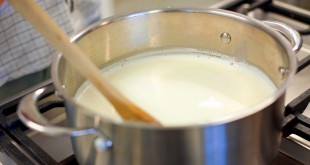
If it is not refregerated, milk gets infected with pathogens (Becteria, Viruses), so it is boiled at regular intervals. When milk is boiled at 100 degree Celsius, nearly all pathogens get killed. And boiling retains the enzymes, taste, flavour and nutrients that are present in milk. In the refrigerator, the bacteria get inactivated, but they don’t die. Hence, boiling is …
Read More »Why do bride sit to the left of their grooms?

Brides sit to the left of their grooms following religious scriptures. In the scriptures, it says the left side of a male represents his wife, and the right side of a female represents her husband. Funny Logics So that the bride is closer to the groom’s heart. To set their husband right. Because the groom is Mr Right for the …
Read More »What’s the difference between a folk tale and a fairy tale?

A folk tale is a narrative in prose, usually woven together by an unknown author. It travels orally through generations by way of story telling. The term is also extended to include stories by known authors, when printed stories are adapted to suit a certain time at culture-specific story telling sessions. They also include myths, fables and tales of heroes. …
Read More »