 Kids Portal For Parents India Kids Network
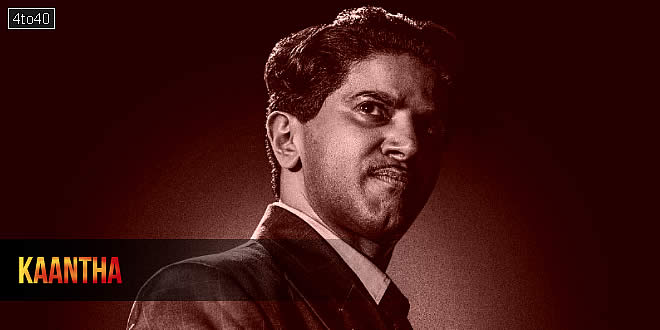
Movie Name: Kaantha
Directed by: Vignesh Shivan
Starring: Dulquer Salman, Rana Daggubati, P. Samuthirakani, Bhagyashri Borse
Genre: Biography, Thriller, Horror
Release Date: 14 November, 2025
Language: Tamil
Running Time: 163 Minutes
Rating:
Production Companies: Spirit Media, Wayfarer Films
Budget: ₹- crore
Set in the 1950s, in Madras, the film revolves around the legendary director in Tamil, Ayya, and his strained relationship with T. K. Mahadevan, a film star he helped establish and popularize. When Mahadevan renames a female-focused film production that was previously called “Shaantha” to suit his own image to “Kaantha”, the story takes a different direction.
Kaantha: Movie Overview
Kaantha is an upcoming Indian Tamil-language period drama thriller film co-written and directed by Selvamani Selvaraj, starring Dulquer Salmaan, Rana Daggubati, Samuthirakani & Bhagyashri Borse in the lead roles based on the life of M. K. Thyagaraja Bhagavathar. The film is jointly produced by Rana Daggubati and Dulquer Salmaan under their Spirit Media and Wayfarer Films banners respectively.
Kaantha is scheduled to release in theatres worldwide on 14 November 2025, coinciding Children’s Day in Tamil, along with dubbed versions in Telugu, Malayalam, Kannada and Hindi.
The background score is composed by Jakes Bejoy while the songs have been composed by Jhanu Chanthar in his continued collaboration with Selvamani Selvaraj. The first single titled “Panimalare” in Tamil and “Pasi Manase” in Telugu was released on 9 August 2025. The second single titled “Kanmani Nee” in Tamil and “Ammadive” in Telugu was released on 22 October 2025. The third trilingual single titled “Rage Of Kaantha” jointly written and performed in English, Tamil and Telugu was released on 30 October 2025.
In 1950s Madras, lives intertwine against a backdrop of social transformation during India’s post-independence era.
Movie Trailer:
Movie Review:
Dulquer holds court in a period powder keg
Kaantha Movie Synopsis:
A legendary director and his star actor clash over creative control during a 1950s film production.
Kaantha Movie Review:
Cinema about cinema tends to collapse under its own self-awareness, but Kaantha sidesteps that trap by treating its 1950s film set less like a nostalgic museum piece and more like a cage match dressed in period clothes. Director Selvamani Selvaraj constructs what amounts to a Shakespearean tragedy, where ego, ambition, and betrayal play out against the backdrop of a troubled production. Despite reports linking it to the life of M. K. Thyagaraja Bhagavathar, the film is mercifully fictional, a creation that borrows perhaps a detail or two but otherwise invents its own disaster. The film understands that the formal, theatrical dialogue and heightened performances aren’t bugs but features of recreating an era when cinema carried different sensibilities.
The setup is deceptively simple. KT Mahadevan (Dulquer Salmaan), a star who’s outgrown his mentor’s shadow, arrives to reshape a project called Shaantha into something that serves his image. He renames it Kaantha. Ayya (Samuthirakani), the veteran director who discovered him in street theater and groomed him into stardom, watches his authority dissolve shot by shot. Their real battleground becomes Kumari (Bhagyashri Borse), a Burmese refugee and leading lady both men treat as leverage in their war. Ayya, who found and gave her this opportunity, thinks he can use her to reclaim control and shift focus away from his star. Mahadevan, despite being married to a media baron’s daughter, falls for her anyway. The affair throws gasoline on an already volatile situation.
What makes this dynamic work is how the film plays with the slipperiness of performance itself. You’re never entirely sure when Mahadevan is acting and when genuine emotion surfaces. Is his devotion to Kumari real, or is Ayya right that everything with him is calculated theater? The ambiguity isn’t just a character quirk but the film’s actual engine, keeping you second-guessing motives even as events move toward their inevitable conclusion. Selvamani leans into this theatrical quality rather than fighting it. The brownish, desaturated palette evokes period atmosphere without draining vitality, and the confined sets reinforce the stage-play aesthetic. When a gun appears early on, you know it’s going to fire eventually. The question becomes who pulls the trigger and why.
Once things take a darker turn, Inspector Devaraj (Rana Daggubati) transforms the film set into an interrogation theater. He’s a power-tripping cop who clearly enjoys cornering suspects with theatrical flourish and rapid-fire deductions that would never fly in actual procedure. But this isn’t aiming for gritty realism. It’s a dramatized spectacle where testimonies feel less like standard questioning and more like confessional monologues. Even peripheral characters like the studio head (Ravindra Vijay), Ayya’s assistant (Bijesh Nagesh), Mahadevan’s driver (Vaiyapuri), Mahadevan’s wife (Gayathrie Shankar), his father-in-law (Nizhalgal Ravi) and Devaraj’s assistant (Bagavathi Perumal) get moments that land despite limited screen time.
You have to commend Dulquer’s variety in script selection and his commitment to making each choice count. He captures the old-school star mystique without overplaying it, delivering calculated looks and mannerisms that occasionally crack to reveal something underneath. His chemistry with Bhagyashri avoids typical commercial beats, opting for a quieter authenticity that suits an age where romance couldn’t be overtly expressed. Bhagyashri manages the difficult balance of playing someone manipulated by Ayya while falling genuinely for Mahadevan, never letting Kumari collapse into a mere device for the men’s war. Samuthirakani brings gravity without tipping into caricature, playing a spurned mentor who weaponizes every tool at his disposal. Rana Daggubati commits fully to the dramatized cop routine, and while the character stretches credibility, it’s theatrically effective.
Where Kaantha stumbles is in its transparency. Red herrings get tossed around, but once the pieces align, the trajectory feels obvious. There’s also a curious lack of discretion in how the affair unfolds. For a married star in that era, Mahadevan conducts his romance so openly that anyone with a camera could document it, which they do. A bit more caution would’ve made the blackmail feel earned rather than inevitable. You keep waiting for the film to twist harder, but it mostly delivers what you’ve already suspected.
Jakes Bejoy’s score does heavy lifting, injecting mystery into talky exchanges, while editor Anthony manages the 163-minute runtime with discipline, cutting away before scenes overstay their welcome. Selvaraj captures the mechanics of 1950s filmmaking with enough specificity that the crew dynamics and godlike authority of the big men (both the star and the director) feel rooted in something real. The film knows it’s trafficking in archetypes and classical mechanics, and instead of trying to subvert them, it just plays them straight with enough craft to make the old moves land. Sometimes commitment beats cleverness.
Movie Songs:
Song Title: Rage Of Kaantha
Lyrics: Lunarpunk, Yogi B, Devoid, AbhinavaKavi
Music Composer: Jhanu Chanthar
Singer: Siddharth Basrur, Yogi B, AbhinavaKavi
Song Title: Pasi Manase
Lyrics: Krishna Kanth
Music Composer: Jhanu Chanthar
Singer: Pradeep Kumar, Priyanka NK
Song Title: Kanmani Nee
Lyrics: Deepika Karthik Kumar
Music Composer: Jhanu Chanthar
Singers: Pradeep Kumar