 Kids Portal For Parents India Kids Network
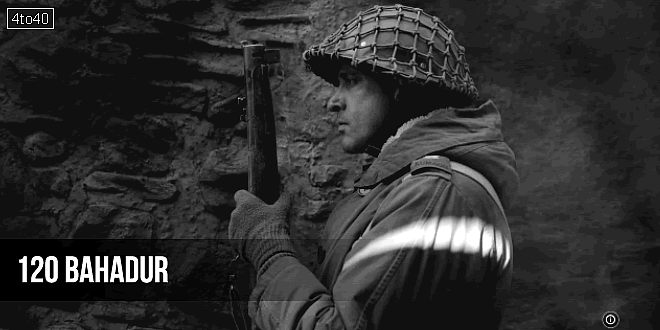
Movie Name: 120 Bahadur
Directed by: Razneesh Ghai
Starring: Farhan Akhtar, Raashii Khanna, Ankit Siwach, Vivan Bhatena, Dhanveer Singh, Sahib Verma, Sparsh Walia, Ajinkya Deo, Eijaz Khan, Ashutosh Shukla, Atul Singh, Brijesh Karanwal, Devendra Ahirwar, Digvijay Pratap, Mrunal Thakur, Paresh Rawal, Hussain Dalal
Genre: Action, Drama, History, War
Running Time: 137 Minutes
Release Date: 21 November, 2025
Rating:
Production Companies: Excel Entertainment, Trigger Happy Studios
Budget: ₹- crore
Valiant Indian soldiers fight against Chinese troops during the 1962 Sino-Indian War, preventing a potential occupation of Ladakh region in the Battle of Rezang La.
120 Bahadur: Movie Overview
120 Bahadur is an upcoming Indian Hindi-language war film directed by Razneesh ‘Razy’ Ghai and produced by Excel Entertainment and Trigger Happy Studios. The film recounts the Battle of Rezang La, considered one of the major events of the Sino-Indian War and fought on 18 November 1962, when 120 soldiers of the Charlie Company, 13 Kumaon Regiment entirely made up of Ahirs from Ahirwal region of Rajasthan and Haryana and led by Major Shaitan Singh stationed in the Chushul sector defended their post at Rezang La pass against repeated assaults by a 3000-strong Chinese Army contingent, inflicting on them over 1300 casualties. The film depicts the account of the battle as recollected by an injured soldier, one of the 6 survivors who had participated in the Battle of Rezang La. The film stars Farhan Akhtar as Major Shaitan Singh and Raashii Khanna as Shaitan’s’s wife Shagun Kanwari Singh.
Based on the true story, the film marks return to acting after three years for Farhan Akhtar after Toofaan as he portrays the role of Major Shaitan Singh Bhati, who was posthumously conferred the Param Vir Chakra which is India’s highest military honor; for his bravery against all odds in the Battle of Rezang La fought on 18 November 1962. The official teaser of the film was released on 5 August 2025 in Mumbai, where Narpat Singh, the son of Shaitan Singh was also present. An official poster of the film was released a day earlier.
120 Bahadur is scheduled for theatrical release in India on 21 November 2025, just 3 days after 63rd anniversary of the legendary battle. The film will be Farhan Akhtar’s first ever IMAX release as an actor. The teaser release function was held at a multiplex in Mumbai, where the teaser was also released on IMAX. The film is being distributed by AA Films.
Movie Trailer:
#OfficialTeaser2
#OfficialTrailer
Movie Review:
Farhan Akhtar shines in this compelling recreation of the battle of Rezang La
Technical prowess and emotional heft come together in Razneesh Ghai’s stylish tribute to the steely defiance and courage of our soldiers
Much like our political leadership, Bollywood largely remains silent on our battles and skirmishes with our northern neighbour. This week is a glorious exception, as director Razneesh Razy Ghai brings a tale of valour from the Chinese front as he makes us relive the battle of Rezang La, where 120 Indian bravehearts from the plains thwarted the dragon’s designs on Chushul Airfield to occupy the entire Ladakh during the Sino-Indian war on November 21, 1962.
On the 63rd anniversary of the battle, 120 Bahadur traces the fierce resistance offered by the Charlie Company of the Kumaon Regiment, led by Major Shaitan Singh Bhati (Farhan Akhtar), which inflicted heavy casualties on the Chinese army, forcing them to declare a unilateral ceasefire. While India suffered a setback in the war, the military resolve shown at Rezang La remains an abiding symbol of national pride. Refusing orders to retreat, the soldiers mounted a heroic last stand, fighting hand-to-hand and to their last bullet and last man.
Unlike the generic chest-thumping, jingoistic celebrations of military milestones that Bollywood churns out, 120 Bahadur is a sincere, technically proficient tribute that gives both heart and mind their due on the battlefield. It aligns the beats and the attitude and swagger that are very much of today, without diluting the details of the military manoeuvre in a punishing environment.
More importantly, it showcases the varied social composition of our armed forces, something that our mainstream cinema fails to underline or provide token representation. The battle was fought by Ahir soldiers from the plains of Haryana and Rajasthan. These were sons of farmers, and as Shaitan Singh says in the film, they had imbibed stories of their fathers fighting to save their lands. The film gives us a sense of their purpose and resolve without being didactic.
Despite their exploits in world wars, it suggests why Ahirs were considered an indisciplined lot by the colonial masters and how Shaitan Singh channels their grit and love for the motherland and Lord Krishna into a ferocious force with the war cry Dada Kishan Ki Jai echoing through the socio-political chambers. Ahirs believe they belong to the lineage of master strategist Krishna and hence consider him as their forefather (dada).
Told in flashback mode in the voice of a genial radio operator who is transformed during the battle, the film’s signals are not superficial. It is not part of the narrative, but the film has come at a time when Ahirs or Yadavs are demanding recognition for their contribution and a separate regiment on the lines of Sikh and Jat formations.
Bhati is a Rajput, but Shaitan Singh carries resonance in the Gurjar belts as well, where Bhati is a common surname. It reflects that while being true to one’s caste identity, one could fight for a national cause. Among the soldiers, there is a Dahiya who can sing and Yadav who loves his chocolate. The bursting youthful energy seeps through the screen.
Years after Dharmendra depicted him in Chetan Anand’s much-acclaimed Haqeeqat, Farhan Akhtar relives the legend of Shaitan, who outsmarted the Chinese. Anchoring the film’s emotional core, Farhan embodies a role that demands quiet authority and unyielding resolve with striking authenticity. He transforms a revered historical figure into a deeply human leader whose calm demeanour masks the raging storm inside.
It is all in the hawa, the ether, and Farhan portrays the current that flows through Shaitan, right. He invokes clenched jaw, the iron fist when required, and there is a cadence to the dialogue delivery as per the emotional fervour of the scene. Over the years, Farhan’s films exude a kind of cheeky flair and smart irreverence that is very today. He brings that shrewd swagger to Shaitan Singh, who not only looks at the enemy in the eye but also thinks out of the box to outwit the Chinese at their own game.
Ghai, who impressed with his ambition in Dhakad, puts his potential into kinetic action here. He provides Farhan the ground to fire his limited but effective acting ammunition by creating visceral battle sequences in stunning Himalayan surroundings captured by Japanese cinematographer Tetsuo Nagata. Whether it is the artillery fire or hand-to-hand combat, he takes the audience to the centre of the cold desert, making them feel the bruises, the cuts, and smell the blood on the sheets of snow.
The highlight is the scene where a cornered Shaitan takes down a smug Chinese general by his sheer courage and presence of mind. Having said that, the film gives the mighty Chinese their due and captures them with low-angle shots to generate their towering stature and the benefit of height on the battlefield.
The uneven accent of the support cast jars, and despite Rashii Khanna’s efforts to keep the home story devoid of clichés, the film occasionally stumbles on emotional pacing, and some clichés do creep into the storytelling. It may not be a genre-defining epic, but 120 Bahadur deserves your time and attention.