 Kids Portal For Parents India Kids Network
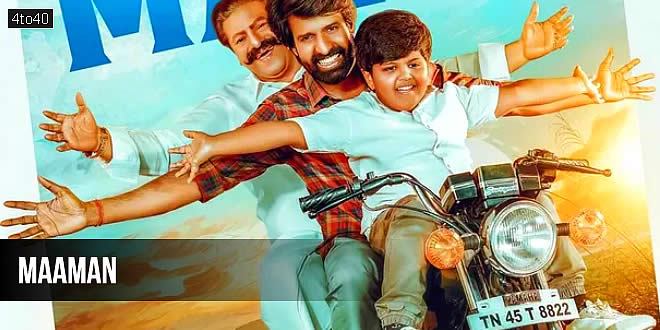
Movie Name: Maaman
Directed by: Prasanth Pandiyaraj
Starring: Soori, Aishwarya Lekshmi, Rajkiran, Swasika, Bala Saravanan, Baba Bhaskar, Viji Chandrasekhar, Nikhila Sankar, Geetha Kailasam
Genre: Action, Comedy, Drama, Family
Release Date: 16 May, 2025
Language: Tamil
Running Time: 152 Minutes
Rating:
Production Companies: Lark Studios
Budget: ₹- Crore
Maaman: Movie Overview
Maaman is an upcoming Indian Tamil-language action drama film directed by Prasanth Pandiyaraj, from a story written by Soori, and produced by K. Kumar under Lark Studios. The film stars Soori and Aishwarya Lekshmi in the lead roles, alongside Rajkiran, Swasika and Bala Saravanan, Baba Bhaskar, Viji Chandrasekhar, Nikhila Sankar and Geetha Kailasam.
Maaman is scheduled to release in theatres on 16 May 2025.
On 19 August 2024, before the theatrical release of Kottukkaali (2024), Soori announced his next project in the lead role with Bruce Lee (2017) and Vilangu (2022) fame Prasanth Pandiyaraj. The film marks the consecutive collaboration of K. Kumar’s Lark Studios, with Soori after Garudan (2024). On 16 December 2024, the title of the film Maaman was revealed after an inaugural pooja ceremony in Trichy following which the production began.[6] Aishwarya Lekshmi was cast as the female lead while Rajkiran was chosen for an important role[8] alongside Swasika, Bala Saravanan, Baba Bhaskar, Viji Chandrasekhar, Nikhila Sankar, Geetha Kailasam and others in supporting roles. The film has cinematography handled by Dinesh Purushothaman, editing done by Ganesh Siva and music composed by Hesham Abdul Wahab. A few days before the release date announcement, Sivakarthikeyan made a surprise visit to the film’s sets, sharing an emotional moment with Soori, with whom he had previously collaborated in Varuthapadatha Valibar Sangam (2013), Rajini Murugan (2016), and Don (2022).
The soundtrack and background is composed by Hesham Abdul Wahab Think Music acquired the audio rights.
Maaman is scheduled to release in theatres on 16 May 2025.
The Tamil Nadu distribution rights were acquired by Rasi Chidambaram’s Sri Kumaran Films. AV Media Consultancy acquired the distribution rights of the film for Karnataka.
Movie Trailer:
Movie Review:
Soori, Aishwarya Lekshmi shoulder a flawed melodrama
Director Prasanth Pandiyaraj’s film fails to build on its intriguing central conflict, and the many regressive undertones only take away from its good intentions
Should a family only be a pillar to support us, or can we ever look at it as a social unit made up of independent lives? Does marriage by design lead to familial bonds? If not, when does a relationship truly feel like family? Also, why should a couple’s worth rest on their ability to rear children? These are some of the questions you might ponder while watching Prasanth Pandiyaraj’s Maaman, starring Soori and Aishwarya Lekshmi. Yet, this family drama is so uneven and carries such regressive undertones that it renders many of these explorations useless—or ends up with skewed takes.
The film, at first glance, has all the ingredients of a genre Tamil cinema has mastered — this is a ‘kudumba padam’ throughout, transpiring within a joint family in Trichy, with a dozen characters and their interpersonal dynamics pivoting the story. There are shortcomings in Maaman that shouldn’t discredit its wholesome first half, where the primary characters and their emotional landscapes are wonderfully set up, leading to the central conflict — a young boy Nilan’s (a.k.a Laddoo, played by Mast. Prageeth Sivan) excessive attachment to his uncle Inba (Soori) creates crevices in the latter’s marital life with Rekha (Aishwarya), which in turn spirals into a discord that tears the family apart, almost.
What is fascinating is how we associate most of the members of this family with the chief familial role they play: Rajkiran is Singarayar a.k.a Singam, but you would remember him as thatha, grandfather and patriarch; Soori’s Inba and Baba Baskar’s Ravi are defined by what they do as maama (uncle); Geetha Kailasam is, you might have guessed, a mother. This extends to the other female characters, such as Girija (Swasika, as Inba’s sister and Nilan’s mother), Rekha and Pavun (Viji Chandrasekar, as Singarayar’s wife). Girija and Rekha are women who have to play many roles and appease many interests, while you remember Pavun for sadder reasons.
From how over-the-top some of these equations come across in the beginning — between Inba, Girija and Laddoo — we know this film rides high on sentimentality. But Maaman is also a great case study of how melodrama can be effective in some situations, and why it can turn cringey when the writing doesn’t back it up well. A case for the former is a scene in which Rekha’s father (Jaya Prakash) shatters Inba and the audience by offering a perspective on the central issue. Or a moment when Inba sees Laddoo from a distance, but knows he can’t get any closer. There’s also a brilliant scene featuring Girija and her mother stuck in a baffling situation, that tells you so much about these characters and their dynamics.
But then, Maaman also echoes Tamil cinema’s fascination with milking emotions through melodramatic lines about searching for motherliness in lovers; here, it is about searching for fathers in newborns and husbands. This might work when used sparsely: when Soori calls his unborn nephew as ‘Enna pethaare’, ‘the one who birthed me,’ you understand that he is someone aching with the loss of his father, a love that would be channelled to this child, but why is a child calling someone the same at a later instance?
The trouble with Maaman begins right after the intermission point, when the film meanders to make points that are either archaic or contrived, like a twist involving Singarayar that you see coming miles away. These portions are also where you sense the regressive ideas that underpin Maaman. Singarayar speaks about how families function because of the women, like his wife Pavun, but we never see her do anything other than cook for him; even if this serves a later purpose, why must that relegate Pavun to the background, as just Singarayar’s wife who unlike her husband seldom interacts with other characters? At another juncture, a woman gets slapped by a man, and Singarayar rebukes him, not because it’s the right thing to do, but because “the pride of a man rests in not laying hands on his woman.”
If there is one character in this world who makes sense in what she has to say, and largely stands up for herself, it is Rekha, and Aishwarya Lekshmi is terrific as always. Another film would have explored all that Rekha has to endure in this family, but as an audience member joked, that film would have been titled Athai. Unlike Aishwarya, both Inba and Girija end up as unidimensional characters, oscillating between anger and desperation. But that isn’t to say anything about the performances, as the film largely rests on the shoulders of capable actors (Bala Saravanan provides comic relief as Inba’s partner-in-crime).
Maaman, at the end of the day, makes a case for this sub-genre of family dramas centring around a joint family set in southern Tamil Nadu. After all, a family is a microcosm of a society. If only that old bottle were filled with some refreshing content, Maaman might be remembered as something more than a film that made you cry and, at times, feel infuriated. In an early scene, as Inba is getting married to Rekha, Laddoo throws a tantrum, insisting that he must sit between the couple and that he would tie the nuptial thread first. It’s a demand that wouldn’t fly in most families. But what happens here might be the litmus test for the kind of viewer Prasanth Pandiyaraj wishes to appeal to.